IELTS READING · 强化段

雅思阅读 强化段

Reading Enhancement

CHAPTERS 4 大题型
LESSONS L1 - L5
PRACTICE 真题精讲
VOCAB 核心词汇
SECTION 01

课堂示范

Advertising Needs Attention

Jane Raymond, a consumer psychologist at the University of Wales in Bangor, is carefully holding and gazing at a bottle of Chillz mineral water like a baby. Despite being made of clear plastic, it looks as if it has been carved from ice. This simple feature means shoppers are drawn to this bottle over the others on the shelf and cannot resist picking it up, Raymond says. She studies the subtle factors that motivate us to buy what we buy and advises big companies on how powerful an advertisement is and how it could be designed to stick more firmly in a consumer's memory. Most of all, she works out how to attract your attention.

In today's fast-paced consumer world, attention is in short supply. Whether we are taking our time shopping in a mall, surfing the Internet for information, or just watching television as a form of passive entertainment, consumers are surrounded by messages—one every 15 seconds of our waking lives, according to some estimates. Last year, companies worldwide spent $401 billion on advertising, according to the independent World Advertising Research Centre in the UK. But as the graveyard of failed products shows, they usually get it wrong.

Nine out of ten new products meet an early death, says Jamie Rayner, director of research at ID Magasin, a UK consultancy specialising in consumer behaviour. And the reason, he explains, is simple: conventional advertising has ceased to work. Rayner and his colleagues have measured how consumers—particularly regular commuters—react to advertising, and their conclusion should alarm many executives. They used a camera embedded in a pair of glasses worn to and from work to record commuters' gaze as they glanced at advertisements on their journey. After analysing the recordings and questioning the subjects, they found that most of the advertisements made no impression at all: only about one per cent could be recalled without prompting. It seems that although we may be looking at brands and advertisements all day long, most of the time we're not taking anything in.

Raymond thinks she knows why. Her move from research in visual processing into consumer psychology began in the early 1990s, when she discovered some strange behaviours in the brain's attentional system. She showed people a stream of letters and numbers on a screen and asked them to look out for a letter X. When she asked her volunteers afterwards what they had seen, she found that if the X appeared up to half a second or so after the white letter, or vice versa, people failed to see it. She concluded that if something catches your attention, your brain is blind to anything else for a short period afterwards. She called this effect the "attentional blink." "In short, the reason most advertising doesn't work is that we're in a severe state of attentional overload. Unless advertising is presented in a way the brain can absorb, it is simply not seen," Raymond says.

So what does this mean for advertisers? A typical television advertisement consists of a series of attention-grabbing images interspersed with the product. But unless the scenes in the advertisement are cut to take account of attentional blinks, the brain is likely to ignore the information the advertiser wants to get across. The same applies to magazine advertisements, where viewers often register the main image but fail to pick up on the secondary images—the bits advertisers often desperately want us to see. Raymond says advertisers consistently fail to consider how easily the brain misses the point. It's not that they haven't realised that the space and time they have to get their message across has shrunk. But advertisers respond by cramming in ever more complex information. Raymond is opposed to this and her advice is simple: deliver your message in a straightforward manner and do so slowly, gently and concisely.

After her research on the attentional blink, she wondered whether attention would be linked to other processes in the brain, particularly emotion. Could our attentional state influence whether we like or dislike a brand, for example? Today, companies are hugely interested in the emotional value of their brands as they want their products to make us feel good. It is well known that if something elicits positive emotions then you are more likely to take notice of it. But Raymond's further research also demonstrates that if people are distracted by an image or a brand when performing an intellectually demanding task, they tend to instantly dislike the brands, regardless of their emotional value. So, for example, if you are reading a web page when a banner advertisement starts flashing, or are watching a film with intrusive product placement, it is probable you will come to dislike the brand whatever it is.

This contradicts the more-exposure-the-better rule most of the industry follows, says Raymond, and means that advertising can backfire horribly. Advertisers tend to buy as much exposure for a product as they can—through television and radio commercials, billboards, whatever they think will attract their target audiences—but again Raymond has found that this doesn't necessarily work in their favour. Perhaps the most dangerous time, says Raymond, is the holiday season when advertisers are madly competing to grab people's attention. "Marketers don't realise that humans digest information like they do food. Once they are full, if they are shown any more food, they're disgusted," she says.

Questions 1-7
Do the following statements agree with the information given in Reading Passage 1?
In boxes 1-7 on your answer sheet, write
1 Jane Raymond states that Chillz mineral water is packaged in a way that is unattractive to consumers.
2 Consumers are still exposed to more advertising through television commercials than through the medium of the Internet.
3 Jamie Rayner says that people are no longer influenced by traditional advertisements.
4 According to Jamie Rayner, the reason that most products are discontinued is that advertising fails to attract consumers.
5 Jane Raymond believes that commercials should be simpler in their content.
6 Advertisements showing unfamiliar brands affect a person's concentration more than ones with familiar brands.
7 Jane Raymond suggests that a product should be advertised in as many ways as possible.
Questions 8-13
Answer the questions below.
Choose NO MORE THAN THREE WORDS from the passage for each answer.
Write your answers in boxes 8-13 on your answer sheet.
8. What group of consumers were specifically targeted in Jamie Rayner's research?
9. What subject did Jane Raymond study before focusing on the behaviour of consumers?
10. According to the writer, what important aspect of an advertisement in print do many people fail to notice?
11. According to the writer, what do companies today want their products to have in order to make consumers feel positive about themselves?
12. What does Jane Raymond say will annoy someone watching a movie?
13. According to Jane Raymond, when do advertisers promote their products most fiercely?

操作说明:选中文本可使用高亮/便签功能 · 题号旁圆点可标记疑问题目 · 右上角⛶可全屏

重点词汇 · Advertising Needs Attention 10 词 · ★0 +
gaze
/ɡeɪz/
n. & v.
凝视;注视
She was gazing at the bottle.
NOTES
carve
/kɑːv/
v.
雕刻;刻
It looks as if it has been carved from ice.
NOTES
subtle
/ˈsʌtl/
adj.
微妙的;细微的
She studies the subtle factors.
NOTES
cease
/siːs/
v.
停止;终止
Conventional advertising has ceased to work.
NOTES
straightforward
/ˌstreɪtˈfɔːwəd/
adj.
直接的;简单的
Deliver your message in a straightforward manner.
NOTES
concisely
/kənˈsaɪsli/
adv.
简洁地
Do so slowly, gently and concisely.
NOTES
visual processing
/ˈvɪʒuəl ˈprəʊsesɪŋ/
n.
视觉处理
Her move from research in visual processing.
NOTES
intrusive
/ɪnˈtruːsɪv/
adj.
侵入的;打扰的
A film with intrusive product placement.
NOTES
product placement
/ˈprɒdʌkt ˈpleɪsmənt/
n.
植入式广告
Intrusive product placement in films.
NOTES
disgust
/dɪsˈɡʌst/
n. & v.
厌恶;使厌恶
They're disgusted by more food.
NOTES
WORDPHONETICPOS & MEANINGNOTES
gaze
/ɡeɪz/
n. & v. 凝视;注视
carve
/kɑːv/
v. 雕刻;刻
subtle
/ˈsʌtl/
adj. 微妙的;细微的
cease
/siːs/
v. 停止;终止
straightforward
/ˌstreɪtˈfɔːwəd/
adj. 直接的;简单的
concisely
/kənˈsaɪsli/
adv. 简洁地
visual processing
/ˈvɪʒuəl ˈprəʊsesɪŋ/
n. 视觉处理
intrusive
/ɪnˈtruːsɪv/
adj. 侵入的;打扰的
product placement
/ˈprɒdʌkt ˈpleɪsmənt/
n. 植入式广告
disgust
/dɪsˈɡʌst/
n. & v. 厌恶;使厌恶
没有找到匹配的词汇
SECTION 02

题型讲解

简答题解题四步法
STEP 1

读题,注意字数

简答题的题目要求中会明确规定答案的字数限制,如 "NO MORE THAN THREE WORDS"、"NO MORE THAN TWO WORDS AND/OR A NUMBER" 等。做题前务必仔细阅读要求,避免因超字数而丢分。同时注意题目是否指定了段落范围。

常见字数限制:ONE WORD ONLY / NO MORE THAN TWO WORDS / NO MORE THAN THREE WORDS AND/OR A NUMBER
STEP 2

优先提取专有名词、特殊词等"显眼包"用来定位

简答题的题干本身就是定位线索。优先提取专有名词(人名、地名、机构名)、数字、大写字母词等"显眼包",这些词在原文中最具辨识度,能帮助快速锁定答案所在位置。

定位词优先级:专有名词 > 数字 > 大写字母词 > 特殊符号/术语 > 普通名词
STEP 3

疑问词即是空格,通过题干关键词锁定对象

简答题的疑问词(What, Which, When, Where, Who, How, Why)直接决定了答案的内容类型。通过题干中的关键词锁定原文中的对象后,找到疑问词对应的答案信息。例如 What 问事物,Who 问人物,When 问时间,Where 问地点,How 问方式/数量。

疑问词与答案类型对应:What→事物 | Who→人物 | When→时间 | Where→地点 | How→方式/数量 | Why→原因
STEP 4

原文关键词匹配,选词填写,不要强行删改

在原文中找到与题干关键词匹配的句子后,从中选取合适的词或短语作为答案。注意:答案必须来自原文,不要自行改写或同义替换;照抄原文中的词即可,参考填空题的做法。同时检查答案是否符合字数限制。

关键原则:答案必须来自原文 · 照抄不删改 · 检查字数限制 · 注意语法一致性
SECTION 03

课堂练习1

Categorizing Societies

When research scholars, including archaeologists and anthropologists, study societies past or present, it can be very useful to have a system of ranking against which to test their ideas. A four-fold categorizing system was developed by the American anthropologist Elman Service; each grouping is associated with certain types of site and settlement. The four types are known as bands, tribes, chiefdoms and early states.

Bands

These are small-scale societies, generally of fewer than 100 people, who live by hunting and gathering, moving seasonally to take advantage of wild (undomesticated) food sources. Most groups who live in this way today, such as the Hadza of Tanzania or the San of southern Africa, would be classified as bands. The members of one band are generally related to each other, either by descent or by marriage. Bands lack formal leaders, so there are no clear economic differences or other differences in status among the members. Because bands are composed of mobile groups, their sites consist mainly of seasonally occupied camps and some other sites, such as work sites, where tools are made or other specific activities are carried out. Archaeological sites associated with this type of society may show evidence of insubstantial dwellings, along with the debris of residential occupation. Most sites from the Palaeolithic period (more than 12,000 years ago) seem to be associated with groups of this type.

Tribes

These are generally larger than bands but rarely number more than a few thousand people, whose diet is mainly based on plants or domestic animals. Typically, these people are settled farmers, but for some groups life is nomadic, with a mobile economy based on herds of animals. Although some tribes have officials, these lack the economic base necessary for effective use of power. The typical settlement pattern for tribes is one of permanent agricultural homesteads or villages. Characteristically, no one settlement dominates any of the others in the region. Instead, the archaeologist often finds evidence of isolated, permanently occupied houses, or permanent villages. These latter may be made up of a collection of free-standing houses like those of the first farmers of the Danube Valley in Europe, or their houses may be grouped together, as in the pueblos of the American Southwest, or the early farming village of Catalhoyuk in what is now Turkey.

Chiefdoms

These operate on the principle of ranking—differences in social status between people. Different lineages (groups claiming descent from a common ancestor) are graded on a scale of prestige, and the senior lineage, and hence the society as a whole, is governed by a chief. Prestige and rank are determined by how closely related one is to the chief, and there is no true stratification into classes. The role of the chief is crucial. Often, there is local specialisation in craft products such as pottery, cloth and leatherware, and any surplus of these and of foodstuffs is periodically paid to the chief. He uses these to pay his retainers and may also redistribute them to his subjects as rewards. The chiefdom generally has a centre of power, often with temples, residences of the chief and his retainers, and craft specialists. Chiefdoms vary greatly in size, but the range is generally between 5,000 and 20,000 persons. Chiefdoms give indications that some sites were more important than others and may have operated as permanent ritual and ceremonial centres, although they were not centres with an established bureaucracy. Examples are Moundville in Alabama, USA, or the late-Neolithic monuments of Wessex in southern Britain, including the famous ceremonial centre of Stonehenge.

Early states

These preserve many of the features of chiefdoms, but the ruler, perhaps a king or queen, has explicit authority to establish laws and to enforce them by means of a standing army. The society no longer depends on kin relationships but is stratified into different classes. Agricultural workers and the poorer urban dwellers make up the base of the pyramid, with the craft specialists above them and the priests and relatives of the ruler higher still. The society is regarded as a territory owned by the ruling lineage and populated by tenants who have the obligation to pay taxes. The central capital houses the officials of a bureaucratic administration. One of their main functions is to collect revenue (often in the form of taxes and tolls) and distribute it to government, army and craft specialists. Many early states developed complex redistribution systems to support these essential services.

Early-state societies show a characteristic settlement pattern in which cities play the predominant part. The city is typically a large population centre of more than 5,000 people, with major public buildings, and often there is a pronounced settlement hierarchy with the capital city as the major centre and subsidiary or regional centres as well as local villages.

Certainly, it would be wrong to over-emphasise the importance of the four types of society given above, or to spend too long agonising as to whether a particular society should be classified in one category or another. However, in seeking to talk about early societies, we must use words and hence concepts to do so. Elman Service's categories provide us with a good framework to organise our thoughts. They should not, however, deflect us from focusing on changes over time in the different institutions of a society, whether in the social sphere, the organisation of the food quest, technology, contact and exchange, or the spiritual life.

Questions 1-7
Do the following statements agree with the information given in Reading Passage 1?
In boxes 1-7 on your answer sheet, write
1 There is usually little difference in wealth between the various members of a band.
2 In tribes, farmers typically grow a wide range of food plants.
3 A typical tribe has one settlement which is more important than others.
4 In a chiefdom, social status usually depends on the amount of land a person owns.
5 A chiefdom typically contains some workers who are engaged in making goods.
6 An early state may depend on military power to maintain law and order.
7 Bureaucratic officials in early states receive higher salaries than any other workers.
Questions 8-13
Answer the questions below.
Choose NO MORE THAN TWO WORDS AND/OR A NUMBER from the passage for each answer.
Write your answers in boxes 8-13 on your answer sheet.
8. What items do bands produce at work sites?
9. Which way of life, apart from settled farming, may be followed by people in tribes?
10. How were houses arranged in the village of Catalhoyuk?
11. Which items, apart from craft goods, may be given by a chief to members of his chiefdom?
12. What is usually the maximum number of people living in a society which has a chief?
13. Apart from less wealthy inhabitants of cities, which group forms the lowest class in an early state?

操作说明:选中文本可使用高亮/便签功能 · 题号旁圆点可标记疑问题目 · 右上角⛶可全屏

重点词汇 · Categorizing Societies 22 词 · ★0 +
anthropologist
/ˌænθrəˈpɒlədʒɪst/
n.
人类学家
Anthropologists study societies past or present.
NOTES
categorize
/ˈkætəɡəraɪz/
v.
分类
A four-fold categorizing system was developed.
NOTES
tribe
/traɪb/
n.
部落
The four types are bands, tribes, chiefdoms and early states.
NOTES
chiefdom
/ˈtʃiːfdəm/
n.
酋长领地;酋长制社会
Chiefdoms operate on the principle of ranking.
NOTES
undomesticated
/ˌʌndəˈmestɪkeɪtɪd/
adj.
未被驯化的;野生
Wild (undomesticated) food sources.
NOTES
dwell
/dwel/
v.
居住
Evidence of insubstantial dwellings.
NOTES
debris
/ˈdebriː/
n.
废墟;残骸
The debris of residential occupation.
NOTES
nomadic
/nəʊˈmædɪk/
adj.
游牧的
Life is nomadic, with a mobile economy.
NOTES
permanent
/ˈpɜːmənənt/
adj.
永久的;固定的
Permanent agricultural homesteads or villages.
NOTES
descent
/dɪˈsent/
n.
血统;下降
Groups claiming descent from a common ancestor.
NOTES
prestige
/preˈstiːʒ/
n.
威望
Graded on a scale of prestige.
NOTES
craft products
/krɑːft ˈprɒdʌkts/
phr.
手工艺品
Local specialisation in craft products.
NOTES
periodically
/ˌpɪəriˈɒdɪkli/
adv.
周期性地;定期地
Surplus is periodically paid to the chief.
NOTES
ritual
/ˈrɪtʃuəl/
n. & adj.
仪式(的)
Permanent ritual and ceremonial centres.
NOTES
explicit
/ɪkˈsplɪsɪt/
adj.
明确的;清楚的
Explicit authority to establish laws.
NOTES
implicit
/ɪmˈplɪsɪt/
adj.
含蓄的;隐含的
The implicit meaning behind the words.
NOTES
revenue
/ˈrevənjuː/
n.
收入;税收
Collect revenue in the form of taxes.
NOTES
tenant
/ˈtenənt/
n.
租户
Populated by tenants who have the obligation to pay taxes.
NOTES
obligation
/ˌɒblɪˈɡeɪʃn/
n.
义务;责任
The obligation to pay taxes.
NOTES
bureaucratic
/ˌbjʊərəˈkrætɪk/
adj.
官僚的
The officials of a bureaucratic administration.
NOTES
hierarchy
/ˈhaɪərɑːki/
n.
等级制度
A pronounced settlement hierarchy.
NOTES
subsidiary
/səbˈsɪdiəri/
n. & adj.
子公司;辅助的
Subsidiary or regional centres.
NOTES
WORDPHONETICPOS & MEANINGNOTES
anthropologist
/ˌænθrəˈpɒlədʒɪst/
n. 人类学家
categorize
/ˈkætəɡəraɪz/
v. 分类
tribe
/traɪb/
n. 部落
chiefdom
/ˈtʃiːfdəm/
n. 酋长领地;酋长制社会
undomesticated
/ˌʌndəˈmestɪkeɪtɪd/
adj. 未被驯化的;野生
dwell
/dwel/
v. 居住
debris
/ˈdebriː/
n. 废墟;残骸
nomadic
/nəʊˈmædɪk/
adj. 游牧的
permanent
/ˈpɜːmənənt/
adj. 永久的;固定的
descent
/dɪˈsent/
n. 血统;下降
prestige
/preˈstiːʒ/
n. 威望
craft products
/krɑːft ˈprɒdʌkts/
phr. 手工艺品
periodically
/ˌpɪəriˈɒdɪkli/
adv. 周期性地;定期地
ritual
/ˈrɪtʃuəl/
n. & adj. 仪式(的)
explicit
/ɪkˈsplɪsɪt/
adj. 明确的;清楚的
implicit
/ɪmˈplɪsɪt/
adj. 含蓄的;隐含的
revenue
/ˈrevənjuː/
n. 收入;税收
tenant
/ˈtenənt/
n. 租户
obligation
/ˌɒblɪˈɡeɪʃn/
n. 义务;责任
bureaucratic
/ˌbjʊərəˈkrætɪk/
adj. 官僚的
hierarchy
/ˈhaɪərɑːki/
n. 等级制度
subsidiary
/səbˈsɪdiəri/
n. & adj. 子公司;辅助的
没有找到匹配的词汇
SECTION 04

课堂练习2

Insect-inspired Robots

A A tiny insect navigates its way across featureless salt-pans. A cockroach successfully works out how to scramble over an obstacle. The mantis shrimp scans its aquatic world through hyperspectral eyes. Using the most basic of equipment and brains tinier than a pin-head, insects constantly solve complex problems of movement, vision and navigation – processing data that would challenge a super-computer. How they do it is driving one of the most exciting new fields of technology – biomimetics and biorobotics, the imitation of insect systems to control man-made machines. Delegates at a recent conference presented some outcomes of their work in this area.

B Dr Alex Zelinsky suggested that the method by which wasps use landmarks to find their way back to the nest may one day be part of a system for navigating cars that know where to go. A research team led by Dr Zelinsky has shown that a robot can navigate its way among 50 different landmarks by recognising them individually using a panoramic camera. "The inspiration came from biology, where wasps use a practical method turn back and look to orient themselves as they emerge from their nest. By flying to and fro, they look at the wasp nest from different angles and perspectives so they can recognise it again," he explained. The robot's panoramic camera logs the surrounding area and its key landmarks, which are then stored in its computer according to how reliable they are as navigational aids. The landmarks are then scaled, from small to large, so that the robot can recognise whether it is getting closer to or further away from them. Their location is built into a map in its mind, which operates at different scales and instructs the robot whether to turn left or right at a particular mark. The technology provides a general way for a machine to navigate an unknown landscape.

C For three decades, Professor Ruediger Wehner has journeyed from Switzerland to the Sahara Desert where Cataglyphis, a tiny ant with a brain weighing just 0.1 mg, performs acts of navigational genius when it leaves its nest, forages for food and returns successfully. Cataglyphis uses polarised light, caused when air molecules scatter light, to orient and steer itself. Wehner's team found that the ant has a set of specialised photoreceptors along the upper rim of its eyes that detect polarised light, while other receptors perform different navigational tasks. As the sun moves, the ant notes its direction each time it leaves the nest and updates its internal compass. Using other eye receptors it stores a snapshot image of landmarks close to the nest entrance in its eyes and compares this with what it sees as it returns. The ant also has a way of measuring distance travelled, while a path integrator periodically informs the ant of its current position relative to its point of departure. Rather than integrate all the information it receives in its brain, the ant actually performs a number of complex calculations in different organs. Like a super-computer, the ant has many separate sub-routines going on simultaneously.

Using the ant's ability to steer by polarised light and to store and reuse landscape images, Wehner and colleagues have built "Sahabot," a small vehicle that uses polarisers and a CCD camera to store 360° images of its surroundings. It navigates by using polarised sunlight and comparing the current images of landmarks to the ones in its memory.

D Professor Robert Michelson had a different desert challenge – to design a flying robot that can not only navigate but also stay aloft and hover in the thin atmosphere of Mars. Drawing inspiration from insect flight, he has gone beyond nature to devise a completely new concept for a flying machine. The "Entomopter" is a sort of double-ended dragonfly whose wings beat reciprocally. Michelson says that the flapping-wing design gives the craft unusually high lift compared with a fixed-wing flyer, enabling it to fly slowly or hover in the thin Martian air – whereas a fixed-wing craft would have to move at more than 400 km/h and could not stop to explore.

E Engineer Roger Quinn and entomologist Professor Roy Ritzmann are taking their inspiration from cockroaches. According to Quinn and Ritzmann, the ability of cockroaches to run very fast over rough terrain may one day give rise to a completely new all-terrain vehicle with six legs, or maybe even wheel-like legs called "whegs." The key to the cockroach's remarkable cross-country performance lies partly in the fact that its legs do a lot of the thinking without having to consult the brain. Quinn and Ritzmann are drawing on cockroach skills to create robotic walkers and control strategies that capture the remarkable capacity of these insects to traverse complex terrain and navigate safely toward goals while avoiding obstacles. The team has already designed a series of robots that run on six legs or on whegs, enabling them to handle surprisingly rugged terrain.

F International experts believe there are tremendous opportunities in biorobotics. However, delegates at the conference had differing visions for the future of the science. While some were concerned that the initial applications of biorobotics may be military, others, such as Dr Barbara Webb, predicted swarms of tiny, cheap, insect-like robots as society's cleaners and collectors. Sonja Kleinlogel hoped the study of the hyperspectral eyes of the mantis shrimp might yield remote sensors that can watch over the environmental health of our oceans. Several delegates were concerned about the ethical implications of biorobotics and urged that close attention be paid to this as the science and technologies develop.

Questions 33-36
Answer the questions below.
Choose NO MORE THAN THREE WORDS from the passage for each answer.
Write your answers in boxes 33-36 on your answer sheet.
33. Which creature sees particularly well under water?
34. In addition to a computer, what technical equipment is fitted in Dr Zelinsky's robot?
35. Where is the Cataglyphis ant found?
36. What atmospheric effect helps the Cataglyphis ant to know its direction?
Questions 37-40
Look at the following people (37-40) and the list of robots below.
Match each robot with the person credited with its development.
Write the correct letter, A-G, in boxes 37-40 on your answer sheet.
List of Robots:
A. a robot that makes use of light as well as stored images for navigational purposes
B. a robot that can contribute to environmental health
C. a robot that can move over difficult surfaces
D. a robot that categorises information from the environment according to its usefulness
E. a robot that can be used to clean surfaces and collect rubbish
F. a robot that has improved on the ability of the insect on which it is based
G. a robot that can replace soldiers in war

37. Dr Alex Zelinsky

38. Professor Ruediger Wehner

39. Professor Robert Michelson

40. Roger Quinn and Professor Roy Ritzmann

操作说明:选中文本可使用高亮/便签功能 · 题号旁圆点可标记疑问题目 · 右上角⛶可全屏

重点词汇 · Insect-inspired Robots 11 词 · ★0 +
aquatic
/əˈkwætɪk/
adj.
水生的;水中的
The mantis shrimp scans its aquatic world.
NOTES
panoramic
/ˌpænəˈræmɪk/
adj.
全景的
Recognising landmarks using a panoramic camera.
NOTES
polarise
/ˈpəʊləraɪz/
v.
使极化;使两极分化
Cataglyphis uses polarised light to orient itself.
NOTES
molecule
/ˈmɒlɪkjuːl/
n.
分子
Air molecules scatter light.
NOTES
scatter
/ˈskætə/
v.
散开;撒播
Air molecules scatter light.
NOTES
orient
/ˈɔːrient/
v.
使适应;确定方向
Wasps orient themselves as they emerge.
NOTES
steer
/stɪə/
v.
驾驶;引导
Cataglyphis uses polarised light to steer itself.
NOTES
log
/lɒɡ/
n. & v.
原木;日志;记录
The panoramic camera logs the surrounding area.
NOTES
terrain
/təˈreɪn/
n.
地形;地势
Run very fast over rough terrain.
NOTES
remote
/rɪˈməʊt/
adj.
偏远的;遥远的
Remote sensors that can watch over oceans.
NOTES
cockroach
/ˈkɒkrəʊtʃ/
n.
蟑螂
The ability of cockroaches to run very fast.
NOTES
WORDPHONETICPOS & MEANINGNOTES
aquatic
/əˈkwætɪk/
adj. 水生的;水中的
panoramic
/ˌpænəˈræmɪk/
adj. 全景的
polarise
/ˈpəʊləraɪz/
v. 使极化;使两极分化
molecule
/ˈmɒlɪkjuːl/
n. 分子
scatter
/ˈskætə/
v. 散开;撒播
orient
/ˈɔːrient/
v. 使适应;确定方向
steer
/stɪə/
v. 驾驶;引导
log
/lɒɡ/
n. & v. 原木;日志;记录
terrain
/təˈreɪn/
n. 地形;地势
remote
/rɪˈməʊt/
adj. 偏远的;遥远的
cockroach
/ˈkɒkrəʊtʃ/
n. 蟑螂
没有找到匹配的词汇
SECTION 05

课后练习

Language Strategy in Multinational Companies

The importance of language management in multinational companies has never been greater than today. Multinationals are becoming ever more conscious of the importance of global coordination as a source of competitive advantage, and language remains the ultimate barrier to aspirations of international harmonization. Before attempting to consider language-management strategies, companies will have to evaluate the magnitude of the language barrier confronting them and, in doing so, examine it in three dimensions: language diversity, language penetration and language sophistication. Companies next need to turn their attention to how they should best manage language. There is a range of options from which MNCs can formulate their language strategy.

Lingua Franca

The simplest answer—though realistic only for English-speaking companies—is to rely on one's native tongue. As recently as 1991 a survey of British exporting companies found that over a third used English exclusively in dealings with foreign customers. This attitude that "one language fits all" has also been carried through into the Internet age. A survey of the websites of top American companies confirmed that over half made no provision for foreign-language access, and another found that less than 10 % of leading companies were able to respond adequately to e-mails other than in the company's language. Widespread though it is, however, reliance on a single language is a strategy that is fatally flawed. It makes no allowance for the growing trend in linguistic nationalism whereby buyers in Asia, South America and the Middle East in particular are asserting their right to "work in the language of the customer". It also fails to recognise the increasing vitality of languages such as Spanish, Arabic and Chinese that over time are likely to challenge the dominance of English as a lingua franca. In the IT arena it ignores the rapid globalisation of the Internet, where the number of English-language e-commerce transactions, e-mails and websites is rapidly diminishing as a percentage of the total. Finally, total reliance on a single language puts the English speaker at risk in negotiations. Contracts, rules and legislation are invariably written in the local language, and a company unable to operate in that language is vulnerable.

Functional Multilingualism

Another improvised approach is to rely on what has been termed "functional multilingualism". Essentially, this means muddling through—relying on a mix of languages, pidgins and gestures to communicate by whatever means the parties have at their disposal. In a social context such a shared effort might aid bonding, the frustration of communication being regularly punctuated by moments of absurdity and humour. However, as the basis for business negotiations it appears very hit-and-miss. Yet Hagen's recent study suggests that 16 % of international business transactions are conducted in a "cocktail of languages". Functional multilingualism shares the same defects as reliance on a lingua franca and increases the probability of cognitive divergence between the parties.

External Language Resources

A more rational response is to employ external resources such as translators and interpreters, and certainly there are many excellent companies specialised in these fields. However, this is by no means an end to the language barrier. For a start these services can be very expensive, with a top simultaneous interpreter commanding daily rates as high as a partner in an international consulting firm. Secondly, any good translator or interpreter will insist that, to be fully effective, they must understand the context of the subject matter—something not always possible owing to complexity, lack of preparation time, or more often the reluctance of the parties to explain the wider context to an outsider. Unless there has been considerable pre-explanation, ambiguity and cultural overtones are likely to remain in the source messages. Interpreters will of course endeavour to provide a hi-fidelity translation, but in such circumstances they must use initiative and guess-work, clearly injecting a potential source of misunderstanding. Finally, while a good interpreter will attempt to convey spirit as well as meaning, there is inevitably a loss of rhetorical power; for negotiation, persuasion or humour, an interpreter is a poor substitute for direct communication.

Training

The immediate and understandable reaction to any skills shortage is to consider personnel development, and the language-training industry is well developed, offering programmes at almost every level and in numerous languages. However, no company should be deluded into believing training alone guarantees success. Training budgets are geared to the economic cycle: when times are good, money is invested; when belts tighten, training is one of the first luxuries to be pared down. In a study across four European countries nearly twice as many companies said they needed language training in coming years as had conducted it in past years—highlighting the gap between good intentions and delivery. Unless a company is committed to sustaining the strategy even through bad times, it will fail. One notable and committed leader in language training is the Volkswagen Group. Over many years it has developed a language strategy that can be regarded as a model of professional management. Volkswagen treats language training as a strategic solution, not a tactical one. Progressing from "basics" to full "communication competence" requires completion of six language stages, each demanding roughly 90 hours of classroom refresher work, supplemented by self-study over 6-9 months. Each stage ends with an achievement test that is a prerequisite for continuing. Even this highly structured programme expects a minimum of three years of fairly intensive study before an accountant, engineer, buyer or salesperson can work effectively in a foreign language. Clearly, firms pursuing this route must do so with realistic expectations and long-term commitment; except for brush-up courses for the already fluent, training is not a quick fix and other methods will still be needed.

Questions 27-32
Complete the summary using the list of phrases, A-L, below.
Write the correct letter, A-L, in boxes 27-32 on your answer sheet.
MNCs often encounter language barriers in their daily operations, so they seek several approaches to solve such problems. First, using the native language gives them a realistic base in a different-language-speaking country, but problems turn up when they deal with overseas 27 . For example, when translating key 28 , differences inevitably arise because of rules in different countries. Another way is to rely on a combination of spoken language and 29 , yet a report noted that over one-tenth of business 30 were processed in a party-language setting. A third way is to hire translators. However, this is 31 ; besides, if they are not well-prepared, they have to engage in 32 work.
List of Phrases:
A. gestures   B. clients   C. transactions   D. assumption
E. accurate   F. documents   G. managers   H. body language
I. long-term   J. effective   K. rivals   L. costly
Questions 33-39
Answer the questions below.
Choose NO MORE THAN THREE WORDS AND/OR A NUMBER from the passage for each answer.
Write your answers in boxes 33-39 on your answer sheet.
33. What "understandable reaction" does the author say companies show when facing a skills shortage?
34. During an economic depression, how does the writer label language training in firms?
35. What has Volkswagen Group provided as an example for other multinationals?
36. In Volkswagen, language training is regarded as what kind of solution?
37. How many stages are required to progress from basics to full competence?
38. Roughly how long does each refresher course take?
39. At least how long is needed for a specialist to work effectively in a foreign language?
Question 40
Choose the correct letter, A, B, C or D.
Write your answer in box 40 on your answer sheet.
40. What is the main function of this passage?

操作说明:选中文本可使用高亮/便签功能 · 题号旁圆点可标记疑问题目 · 右上角⛶可全屏

重点词汇 · Language Strategy in Multinational Companies 22 词 · ★0 +
multinational
/ˌmʌltiˈnæʃənl/
adj. & n.
跨国的;跨国公司
Language management in multinational companies.
NOTES
harmonization
/ˌhɑːmənaɪˈzeɪʃn/
n.
协调;和谐
Aspirations of international harmonization.
NOTES
dimension
/daɪˈmenʃn/
n.
维度;方面
Examine it in three dimensions.
NOTES
penetration
/ˌpenɪˈtreɪʃn/
n.
渗透;普及
Language penetration.
NOTES
sophistication
/səˌfɪstɪˈkeɪʃn/
n.
复杂性;精密
Language sophistication.
NOTES
lingua franca
/ˈlɪŋɡwə ˈfræŋkə/
n.
通用语
English as a lingua franca.
NOTES
exclusively
/ɪkˈskluːsɪvli/
adv.
排他地;专门地
Used English exclusively in dealings.
NOTES
provision
/prəˈvɪʒn/
n.
准备;供应
Made no provision for foreign-language access.
NOTES
vitality
/vaɪˈtæləti/
n.
活力;生命力
The increasing vitality of languages.
NOTES
dominance
/ˈdɒmɪnəns/
n.
主导地位;优势
Challenge the dominance of English.
NOTES
vulnerable
/ˈvʌlnərəbl/
adj.
脆弱的;易受伤害的
A company unable to operate is vulnerable.
NOTES
improvised
/ˈɪmprəvaɪzd/
adj.
即兴的;临时凑合的
Another improvised approach.
NOTES
pidgin
/ˈpɪdʒɪn/
n.
皮钦语
A mix of languages, pidgins and gestures.
NOTES
ambiguity
/ˌæmbɪˈɡjuːəti/
n.
歧义;含糊
Ambiguity is likely to remain in the source messages.
NOTES
overtone
/ˈəʊvətəʊn/
n.
弦外之音;暗示
Cultural overtones are likely to remain.
NOTES
hi-fidelity
/haɪ fɪˈdeləti/
n.
高保真
A hi-fidelity translation.
NOTES
rhetorical
/rɪˈtɒrɪkl/
adj.
修辞的
A loss of rhetorical power.
NOTES
delude
/dɪˈluːd/
v.
欺骗;迷惑
No company should be deluded into believing.
NOTES
pare down
/peə daʊn/
phr.
削减
Training is one of the first luxuries to be pared down.
NOTES
prerequisite
/ˌpriːˈrekwɪzɪt/
n.
先决条件
An achievement test that is a prerequisite for continuing.
NOTES
intensive
/ɪnˈtensɪv/
adj.
密集的
Three years of fairly intensive study.
NOTES
commitment
/kəˈmɪtmənt/
n.
承诺;投入
Long-term commitment.
NOTES
WORDPHONETICPOS & MEANINGNOTES
multinational
/ˌmʌltiˈnæʃənl/
adj. & n. 跨国的;跨国公司
harmonization
/ˌhɑːmənaɪˈzeɪʃn/
n. 协调;和谐
dimension
/daɪˈmenʃn/
n. 维度;方面
penetration
/ˌpenɪˈtreɪʃn/
n. 渗透;普及
sophistication
/səˌfɪstɪˈkeɪʃn/
n. 复杂性;精密
lingua franca
/ˈlɪŋɡwə ˈfræŋkə/
n. 通用语
exclusively
/ɪkˈskluːsɪvli/
adv. 排他地;专门地
provision
/prəˈvɪʒn/
n. 准备;供应
vitality
/vaɪˈtæləti/
n. 活力;生命力
dominance
/ˈdɒmɪnəns/
n. 主导地位;优势
vulnerable
/ˈvʌlnərəbl/
adj. 脆弱的;易受伤害的
improvised
/ˈɪmprəvaɪzd/
adj. 即兴的;临时凑合的
pidgin
/ˈpɪdʒɪn/
n. 皮钦语
ambiguity
/ˌæmbɪˈɡjuːəti/
n. 歧义;含糊
overtone
/ˈəʊvətəʊn/
n. 弦外之音;暗示
hi-fidelity
/haɪ fɪˈdeləti/
n. 高保真
rhetorical
/rɪˈtɒrɪkl/
adj. 修辞的
delude
/dɪˈluːd/
v. 欺骗;迷惑
pare down
/peə daʊn/
phr. 削减
prerequisite
/ˌpriːˈrekwɪzɪt/
n. 先决条件
intensive
/ɪnˈtensɪv/
adj. 密集的
commitment
/kəˈmɪtmənt/
n. 承诺;投入
没有找到匹配的词汇
SECTION 06

参考答案

所有练习的参考答案
课堂示范 · Advertising Needs Attention (Q1-13)
题号答案题型
1FT/F/NG
2NGT/F/NG
3TT/F/NG
4TT/F/NG
5TT/F/NG
6NGT/F/NG
7FT/F/NG
8regular commuters简答题
9visual processing简答题
10secondary images简答题
11emotional value简答题
12intrusive product placement简答题
13holiday season简答题
课堂练习1 · Categorizing Societies (Q1-13)
题号答案题型
1TT/F/NG
2NGT/F/NG
3FT/F/NG
4FT/F/NG
5TT/F/NG
6TT/F/NG
7NGT/F/NG
8tools简答题
9nomadic简答题
10grouped together简答题
11foodstuffs简答题
1220,000简答题
13agricultural workers简答题
课堂练习2 · Insect-inspired Robots (Q27-40)
题号答案题型
33mantis shrimps简答题
34(a) panoramic camera简答题
35the Sahara Desert简答题
36polarized light简答题
37D人名匹配
38A人名匹配
39F人名匹配
40C人名匹配
课后练习 · Language Strategy in Multinational Companies (Q27-40)
题号答案题型
27BSummary选词
28FSummary选词
29ASummary选词
30CSummary选词
31LSummary选词
32DSummary选词
33personal development简答题
34a luxury简答题
35a language strategy简答题
36strategic简答题
37six简答题
3890 hours简答题
39three years简答题
40C选择题
SECTION 01

课堂示范

Photovoltaics on the rooftop
A natural choice for powering the family home

A  In the past, urban home owners have not always had much choice in the way electricity is supplied to their homes. Now, however, there is a choice, and a rapidly increasing number of households worldwide are choosing the solar energy option. Solar energy, the conversion of sunlight into energy, is made possible through the use of photovoltaics, which are simple appliances that fit onto the roof of a house.

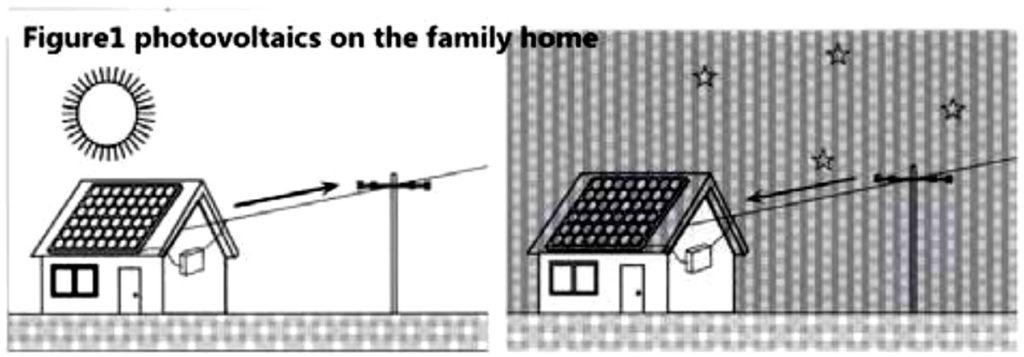
B  The photovoltaics-powered home remains connected to the power lines, but no storage is required on-site, only a box of electronics (the inverter) to the interface between the photovoltaics and the grid network. Figure 1 illustrates the system. During the day, when the home may not be using much electricity, excess power from the solar array is fed back to the grid, to factories and offices that need daytime power. At night, power flows the opposite way. The grid network effectively provides storage. If the demand for electricity is well matched to when the sun shines, solar energy is especially valuable. This occurs in places like California in the US and Japan, where air-conditioning loads for offices and factories are large but heating loads for homes are small.

C  The first systematic exploration of the use of photovoltaics on homes began in the US during the 1970s. A well-conceived program started with the sitting of a number of residential experiment stations' at selected locations around the country, representing different climatic zones. These stations contained a number of 'dummy' houses, each with a different solar-energy system design. Homes within the communities close to these stations were monitored to see how well their energy use matched the energy generated by the stations' dummy roofs. A change in US government priorities in the early 1980s halted this program.

D  With the US effort dropping away, the Japanese Sunshine Project came to the fore. A large residential test station was installed on Rokko Island beginning in 1986. This installation consists of 18 'dummy' homes. Each equipped with its own 2-5 kilowatt photovoltaic system (about 20 – 50 square meters for each system). Some of these simulated homes have their own electrical appliances inside, such as TV sets, refrigerators and air conditioning units, which switch on and off under computer control providing a lavish lifestyle for the non-existent occupants. For the other systems, electronics simulate these household loads. This test station has allowed the technical issues involved in using photovoltaics within the electricity network to be explored in a systematic way, under well-controlled test conditions. With no insurmountable problems identified, the Japanese have used the experience gained from this station to begin their own massive residential photovoltaics campaign.

E  Meanwhile, Germany began a very important '1,000 roof program' in 1990, aimed at installing photovoltaics on the roofs of 1,000 private homes. Large federal and regional government subsidies were involved, accounting in most cases for 70% of the total system costs. The program proved immensely popular, forcing its extension to over 2,000 homes scattered across Germany. The success of this program stimulated other European countries to launch similar programs.

F  Japan's 'one million roof program' was prompted by the experience gained from the Rokko Island test site and the success of the German 1000 roof program. The initially quoted aims of the Japanese New Energy Development Organization were to have 70000 homes equipped with the photovoltaics by the year 2000, on the way to 1 million by 2010. They made a modest start in 1994, when 539 systems were installed with a government subsidy of 50 percent. Under this program, entire new suburban developments are using photovoltaics.

G  The Japanese initiative in embracing residential photovoltaics on a large scale prompted responses in both Europe and the US. The European Commission has called for one million solar residential systems before the year 2010, with 500,000 in Europe and 500,000 in the developing world, to be subsidised by the Commission. In 1997, a similar one million roof target was announced in the US. Since then, several other countries including Germany, Italy, the Netherlands and Australia, have announced their own targets for residential photovoltaics.

H  This is good news, not only for the photovoltaic industry but for everyone concerned with the environment. The use of fossil fuels to generate electricity is not only costly in financial terms, but also in terms of environmental damage. Gases produced by the burning of fossil fuels in the production of electricity are a major contributor to the greenhouse effect. To deal with this problem, many governments are now proposing stringent targets on the amount of greenhouse gas emissions permitted. These targets mean that all sources of greenhouse gas emissions including residential electricity use will receive closer attention in the future.

I  It is likely that in the future, governments will develop building codes that attempt to constrain the energy demands of new housing. For example, the use of photovoltaics or the equivalent may be stipulated to lessen demands on the grid network and hence reduce fossil fuel emissions. Approvals for building renovations may also be conditional upon taking such energy-saving measures. If this were to happen, everyone would benefit. Although there is an initial cost in attaching the system to the rooftop, the householder's outlay is soon compensated with the savings on energy bills. In addition, everyone living on the planet stands to gain from the more benign environmental impact.

Figure 1

Figure 1

Questions
You should spend about 20 minutes on Questions 14-26.
Questions 14-19
Reading Passage has nine paragraphs, A-I.
Which paragraph contains the following information?
Write the correct letter, A-I, in boxes 14-19 on your answer sheet.
NB You may use any letter more than once.
A
B
C
D
E
F
G
H
I
14examples of countries where electricity use is greater during the day than at night
15a detailed description of an experiment that led to photovoltaics being promoted throughout the country
16the negative effects of using conventional means of generating electricity
17an explanation of the photovoltaic system
18the long-term benefits of using photovoltaics
19a reference to wealthy countries being prepared to help less wealthy countries have access to photovoltaics
Questions 20-26
Do the following statements agree with the information given in the passage?
In boxes 20-26 on your answer sheet, write:
TRUE if the statement agrees with the information
FALSE if the statement contradicts the information
NOT GIVEN if there is no information on this
20. Photovoltaics are used to store electricity.
21. Since the 1970s, the US government has provided continuous support for the use of photovoltaics on homes.
22. The solar-powered house on Rokko Island is uninhabited.
23. In 1994, the Japanese government was providing half the money required for installing photovoltaics on homes.
24. Germany, Italy, the Netherlands and Australia all have strict goals with regard to greenhouse gas emissions.
25. Residential electricity use is the major source of greenhouse gas emission.
26. Energy-saving measures must now be included in the design of all new homes and improvements to buildings.
重点词汇 · Photovoltaics 15 词 · ★0 +
appliance
/əˈplaɪəns/
n.
家用电器
photovoltaics, which are simple appliances that fit onto the roof of a house
NOTES
electronics
/ɪˌlekˈtrɒnɪks/
n.
电子器件;电子学
only a box of electronics (the inverter) to the interface between the photovoltaics and the grid network
NOTES
interface
/ˈɪntəfeɪs/
n.
界面;交互界面
only a box of electronics (the inverter) to the interface between the photovoltaics and the grid network
NOTES
grid
/ɡrɪd/
n.
网格;电网
excess power from the solar array is fed back to the grid
NOTES
halt
/hɔːlt/
v. & n.
停止;制止
A change in US government priorities in the early 1980s halted this program.
NOTES
lavish
/ˈlævɪʃ/
adj.
奢华的;慷慨的
providing a lavish lifestyle for the non-existent occupants
NOTES
insurmountable
/ˌɪnsəˈmaʊntəbl/
adj.
不可逾越的;难以克服的
With no insurmountable problems identified, the Japanese have used the experience gained from this station to begin their own massive residential photovoltaics campaign.
NOTES
subsidy
/ˈsʌbsədi/
n.
补贴;津贴
Large federal and regional government subsidies were involved, accounting in most cases for 70% of the total system costs.
NOTES
stringent
/ˈstrɪndʒənt/
adj.
严格的;严厉的
many governments are now proposing stringent targets on the amount of green house gas emissions permitted
NOTES
constrain
/kənˈstreɪn/
v.
限制;约束
governments will develop building codes that attempt to constrain the energy demands of new housing
NOTES
compensate
/ˈkɒmpenseɪt/
v.
补偿;弥补
the householder's outlay is soon compensated with the savings on energy bills
NOTES
outlay
/ˈaʊtleɪ/
n.
支出;费用
the householder's outlay is soon compensated with the savings on energy bills
NOTES
benign
/bɪˈnaɪn/
adj.
良性的;无害的
everyone living on the planet stands to gain from the more benign environmental impact
NOTES
stipulate
/ˈstɪpjuleɪt/
v.
规定;明确要求
the use of photovoltaics or the equivalent may be stipulated to lessen demands on the grid network
NOTES
conversion
/kənˈvɜːʃn/
n.
转换;转变
Solar energy, the conversion of sunlight into energy, is made possible through the use of photovoltaics
NOTES
SECTION 02

题型讲解

Contain题解题四步法
STEP 1

读题,优先抓三类词

Contain题(段落信息匹配题)要求将题目信息与文章段落进行匹配。读题时优先抓取三类关键词:"瞩目词"(专有名词、数字、大写词等显眼词)、"主题词"(题目核心概念)、"结构词"(转折、因果、比较等逻辑词)。同时观察各题干之间的关联性,有些题目可能存在递进或对比关系。

三类关键词:瞩目词(定位) · 主题词(理解) · 结构词(逻辑)
STEP 2

优先解决"瞩目"信息的题目

在所有题目中,含有瞩目词(如人名、地名、年份、数字等)的题目最容易定位,应优先解决。找到对应段落后,在原文中做出高亮标注,并标注题号,方便后续排除和验证。

优先级:含瞩目词的题目 > 含主题词的题目 > 含结构词的题目 > 抽象概括类题目
STEP 3

根据线索确定部分题目

在解决完瞩目信息题目后,利用已确定的段落和题目的关联性,推断其他题目的归属。例如,如果某段已被Q15使用,且Q16的内容与Q15有对比关系,则Q16很可能在相邻段落。同时利用"NB: you may use any letter more than once"提示判断是否有段落被多次引用。

注意题目说明中的 NB 提示:若有"any letter more than once",说明有段落会被多次使用
STEP 4

参考文章框架,完成剩余题目

对于剩余的抽象概括类题目,需要参考文章的整体框架结构。快速浏览各段首句(topic sentence),了解每段主旨,将题目信息与段落主旨进行匹配。注意考点的分布通常比较均匀,避免将过多题目集中在同一段落。

考点分布规律:每段通常对应1-2题,注意段首句和段尾句常为考点
常见陷阱

Contain题四大常见陷阱

陷阱一:关键词原词重现。题目中的关键词在原文中以原词出现时,该段往往是干扰项,正确答案通常在同义替换的段落中。

陷阱二:部分信息干扰。段落中出现了题目中的部分信息,但缺少关键信息,不能仅凭部分匹配就选答案。

陷阱三:跨段信息混淆。题目信息分散在两个段落中,需要判断哪个段落包含更核心的信息。

陷阱四:信息概括过度。题目对段落信息进行了过度概括或引申,超出了原文的表述范围。

核心原则:匹配的是"信息"而非"词语",要理解题目含义后在原文找对应信息
SECTION 03

课堂练习1

Insect-inspired Robots
Insect-inspired robots
A recent conference reports on developments in biorobotics

A  A tiny insect navigates its way across featureless salt-pans. A cockroach successfully works out how to scramble over an obstacle. The mantis shrimp scans its aquatic world through hyperspectral eyes. Using the most basic of equipment and brains tinier than a pin-head, insects constantly solve complex problems of movement, vision and navigation — processing data that would challenge a super-computer. How they do it is driving one of the most exciting new fields of technology — biomimetics and biorobotics, the imitation of insect systems to control man-made machines. Delegates at a recent conference presented some outcomes of their work in this area.

B  Dr Alex Zelinsky suggested that the method by which wasps use landmarks to find their way back to the nest may one day be part of a system for navigating cars that know where to go. A research team led by Dr Zelinsky has shown that a robot can navigate its way among 50 different landmarks by recognising them individually using a panoramic camera. "The inspiration came from biology, where wasps use a practical method turn back and look to orient themselves as they emerge from their nest. By flying to and fro, they look at the wasp nest from different angles and perspectives so they can recognise it again," he explained. The robot's panoramic camera logs the surrounding area and its key landmarks, which are then stored in its computer according to how reliable they are as navigational aids. The landmarks are then scaled, from small to large, so that the robot can recognise whether it is getting closer to or further away from them. Their location is built into a map in its mind, which operates at different scales and instructs the robot whether to turn left or right at a particular mark. The technology provides a general way for a machine to navigate an unknown landscape.

C  For three decades, Professor Ruediger Wehner has journeyed from Switzerland to the Sahara Desert where Cataglyphis, a tiny ant with a brain weighing just 0.1 mg, performs acts of navigational genius when it leaves its nest, forages for food and returns successfully. Cataglyphis uses polarised light, caused when air molecules scatter light, to orient and steer itself. Wehner's team found that the ant has a set of specialised photoreceptors along the upper rim of its eyes that detect polarised light, while other receptors perform different navigational tasks. As the sun moves, the ant notes its direction each time it leaves the nest and updates its internal compass. Using other eye receptors it stores a snapshot image of landmarks close to the nest entrance in its eyes and compares this with what it sees as it returns. The ant also has a way of measuring distance travelled, while a path integrator periodically informs the ant of its current position relative to its point of departure. Rather than integrate all the information it receives in its brain, the ant actually performs a number of complex calculations in different organs. Like a super-computer, the ant has many separate sub-routines going on simultaneously. Using the ant's ability to steer by polarised light and to store and reuse landscape images, Wehner and colleagues have built "Sahabot," a small vehicle that uses polarisers and a CCD camera to store 360° images of its surroundings. It navigates by using polarised sunlight and comparing the current images of landmarks to the ones in its memory.

D  Professor Robert Michelson had a different desert challenge — to design a flying robot that can not only navigate but also stay aloft and hover in the thin atmosphere of Mars. Drawing inspiration from insect flight, he has gone beyond nature to devise a completely new concept for a flying machine. The "Entomopter" is a sort of double-ended dragonfly whose wings beat reciprocally. Michelson says that the flapping-wing design gives the craft unusually high lift compared with a fixed-wing flyer, enabling it to fly slowly or hover in the thin Martian air — whereas a fixed-wing craft would have to move at more than 400 km/h and could not stop to explore.

E  Engineer Roger Quinn and entomologist Professor Roy Ritzmann are taking their inspiration from cockroaches. According to Quinn and Ritzmann, the ability of cockroaches to run very fast over rough terrain may one day give rise to a completely new all-terrain vehicle with six legs, or maybe even wheel-like legs called "whegs." The key to the cockroach's remarkable cross-country performance lies partly in the fact that its legs do a lot of the thinking without having to consult the brain. Quinn and Ritzmann are drawing on cockroach skills to create robotic walkers and control strategies that capture the remarkable capacity of these insects to traverse complex terrain and navigate safely toward goals while avoiding obstacles. The team has already designed a series of robots that run on six legs or on whegs, enabling them to handle surprisingly rugged terrain.

F  International experts believe there are tremendous opportunities in biorobotics. However, delegates at the conference had differing visions for the future of the science. While some were concerned that the initial applications of biorobotics may be military, others, such as Dr Barbara Webb, predicted swarms of tiny, cheap, insect-like robots as society's cleaners and collectors. Sonja Kleinlogel hoped the study of the hyperspectral eyes of the mantis shrimp might yield remote sensors that can watch over the environmental health of our oceans. Several delegates were concerned about the ethical implications of biorobotics and urged that close attention be paid to this as the science and technologies develop.

Questions
You should spend about 20 minutes on Questions 27-32.
Questions 27-32
Reading Passage 3 has six sections, A-F.
Which section contains the following information?
Write the correct letter, A-F, in boxes 27-32 on your answer sheet.
A
B
C
D
E
F
G
27positive and negative possibilities for the use of insect-inspired robots
28how perceived size is used as an aid to navigation
29an example of decision-making taking place in the limbs
30a description of a potential aid in space exploration
31the range of skills that have inspired biorobotics
32how a variety of navigational methods operate at the same time
重点词汇 · Insect-inspired Robots 15 词 · ★0 +
biomimetics
/ˌbaɪəʊmɪˈmetɪks/
n.
仿生学
biomimetics and biorobotics, the imitation of insect systems to control man-made machines
NOTES
biorobotics
/ˌbaɪəʊrəʊˈbɒtɪks/
n.
仿生机器人学
How they do it is driving one of the most exciting new fields of technology — biomimetics and biorobotics
NOTES
navigate
/ˈnævɪɡeɪt/
v.
导航
A tiny insect navigates its way across featureless sand-pans
NOTES
panoramic
/ˌpænəˈræmɪk/
adj.
全景的
a robot can navigate its way among 50 different landmarks by recognising them individually using a panoramic camera
NOTES
landmark
/ˈlændmɑːk/
n.
地标
wasps use landmarks to find their way back to the nest
NOTES
orient
/ˈɔːrient/
v.
确定方位
wasps use a practical method — turn back and look — to orient themselves as they emerge from their nest
NOTES
polarised
/ˈpəʊləraɪzd/
adj.
偏振的
Cataglyphis uses polarised light, caused when air molecules scatter light, to orient and steer itself
NOTES
photoreceptor
/ˌfəʊtəʊrɪˈseptə/
n.
光感受器
the ant has a set of specialised photoreceptors along the upper rim of its eyes that detect polarised light
NOTES
forage
/ˈfɒrɪdʒ/
v.
觅食
it leaves its nest, forages for food and returns successfully
NOTES
hover
/ˈhʌvə/
v.
悬停
to design a flying robot that can not only navigate but also stay aloft and hover in the thin atmosphere of Mars
NOTES
devise
/dɪˈvaɪz/
v.
设计;发明
he has gone beyond nature to devise a completely new concept for a flying machine
NOTES
traverse
/trəˈvɜːs/
v.
穿越
the remarkable capacity of these insects to traverse complex terrain and navigate safely toward goals
NOTES
terrain
/təˈreɪn/
n.
地形
the ability of cockroaches to run very fast over rough terrain
NOTES
ethical
/ˈeθɪkl/
adj.
伦理的
Several delegates were concerned about the ethical implications of biorobotics
NOTES
implication
/ˌɪmplɪˈkeɪʃn/
n.
影响;含义
concerned about the ethical implications of biorobotics and urged that close attention be paid to this
NOTES
SECTION 04

课堂练习2

Nanotechnology: the science of the very small
纳米科技:极小物质的科学

A  Nanoscience and nanotechnology have become very fashionable in recent times. Their prominence has inspired science fiction and raised a lot of hope and hype about the possibilities. But what exactly is nanotechnology? Most definitions agree that it is the manufacture of structures that measure up to 100 nanometres (nm). The diameter of an atom is typically only two or three tenths of a nanometre while that of the human hair is around 1,000,000 nm. Essentially, we are now able to build new structures from atoms and molecules as if we were using the bricks of a children's construction toy.

B  Most of the electronic consumer goods that we use today contain components that measure less than 100 nm. The lasers in our CD and DVD players make use of the properties of semiconductor layers that are just a few atoms in thickness, so we clearly are in the nanotechnology age. There are many other everyday items that we take for granted that have nanoparticles in them. One of these is sunscreen. In the 1990s there were safety issues with many of the sunscreen products available, so scientists at Oxford University set about finding a solution. The product they developed uses nanoparticles of titanium dioxide that are doped with the element manganese. This product is almost transparent to the eye when spread on the skin, and it is effective for much longer than many of the traditional preparations. In this case, we see an example of nanotechnology providing a solution to an existing problem rather than opening up new product areas.

C  The technique of using nanotechnology to adapt existing products can also be applied to garments, upholstery, paint, and plastics to improve their longevity. Bearing this in mind, it is interesting to ask whether nanotechnology can help with some of the world's major current issues. The recent growth in climate change awareness calls a range of things into question. Can we use energy more effectively? Can we reduce the carbon dioxide in the atmosphere? Can we use and purify water more effectively? Can health care be improved? Nanotechnology may very well provide the solutions. There are few times in history when the application of science to improving the human condition has been so apparent.

D  We are already making new types of solar cells and batteries by using our newfound ability to manipulate matter at the atomic and molecular scale. If we can capture some of the huge quantities of energy that arrive at the Earth's surface from the Sun, and store it effectively, we can reduce the need for fossil fuel-based power stations. We are already using nanoparticles and nanoporous materials to capture harmful greenhouse gases, and we may possibly convert some of them back into fuel. There are, however, many technical problems involved, and it will be another decade or so before some of these ideas are deployed.

E  Water purification is increasingly challenging and many believe that water, which we take for granted, is going to become more valuable than oil. Currently we do not use water efficiently, and many industrial and food processes leave contamination in water that is potentially toxic and difficult to remove. Nanofiltration may provide the solution to these problems, and may also offer new routes to the desalination of brackish water and groundwater in some parts of the world.

F  Food production and processing are becoming more important as the world's population increases. There are concerns that potentially harmful nano-products might enter the body via the gut. Such concerns are being addressed, but it is even more important to ask questions about how nanotechnology might increase the nutritious yield of food and be adapted to help preserve and package food. There is already evidence to show that it might also be helpful in the primary production of raw food materials, by way of better delivery of pesticides in the field and better extraction of protein and carbohydrates.

G  Healthcare is an area where the application of nanotechnology is already exceeding the expectations of ten years ago. It is happening across several fronts: better appreciation of what the 'natural' nanoparticles circulating in body fluid do; better methods of delivering drugs to the body via nanoparticles that target the diseased body part; improvements to the diagnostic imaging techniques of ultrasound, magnetic resonance imaging and X-ray computerised tomography. We are now at the threshold of a new subject, 'theranostics', whereby nanoparticles will first deliver the diagnostic information to the clinician and then, using the same particle, deliver a form of therapy.

H  Nanotechnology is a life-changing technology, making the quality of life better, enabling us to make use of our resources more effectively, thereby protecting our environment, and creating new business opportunities. There are many other examples in the world of 'new materials' that also make use of nanotechnology. The possibilities may well be limitless.

Questions
You should spend about 20 minutes on Questions 14-26.
Questions 14-16
Complete the summary below.
Choose ONE WORD ONLY from the passage for each answer.
Write your answers in boxes 14-16 on your answer sheet.

In the same way that a child may use 14 , scientists are now able to create new structures by combining the smallest particles known to man. We can fully appreciate the microscopic scale of this work by comparing the exact 15 of one atom with that of a single human hair.

A lot of today's electronic consumer goods, such as lasers, have components that are microscopic in size. They are not the only products relying on nanotechnology. For example, a long-lasting 16 , widely available today, relies on minute nanoparticles for its effectiveness. This was developed in the 1990s as a result of concerns about the safety of existing products.

Questions 17-22
Reading Passage 2 has eight paragraphs, A-H.
Which paragraph contains the following information?
Write the correct letter, A-H, in boxes 17-22 on your answer sheet.
A
B
C
D
E
F
G
H
17a comparison between two of the world's vital natural resources
18a mention of how nanotechnology could be dangerous for humans
19a claim that nanotechnology has influenced modern authors
20a reference to the fact that nanotechnology is achieving more than was anticipated a decade ago
21a suggestion that nanotechnology could provide financial as well as ecological benefits
22an acknowledgement that more time is required to realise some of nanotechnology's potential
Questions 23 and 24
Choose TWO letters, A-E.
Write the correct letters in boxes 23 and 24 on your answer sheet.
Which TWO of the following statements does the writer make about nanotechnology and energy resources?
Questions 25 and 26
Choose TWO letters, A-E.
Write the correct letters in boxes 25 and 26 on your answer sheet.
In which TWO ways does the writer think nanotechnology could improve food production?
重点词汇 · Nanotechnology 15 词 · ★0 +
particle
/ˈpɑːtɪkl/
n.
粒子
There are many other everyday items that we take for granted that have nanoparticles in them.
NOTES
microscopic
/ˌmaɪkrəˈskɒpɪk/
adj.
极小的;显微镜的
We can fully appreciate the microscopic scale of this work
NOTES
component
/kəmˈpəʊnənt/
n.
部件;成分
Most of the electronic consumer goods that we use today contain components that measure less than 100 nm.
NOTES
consumer goods
/kənˈsjuːmə ɡʊdz/
phr.
消费品
Most of the electronic consumer goods that we use today contain components that measure less than 100 nm.
NOTES
laser
/ˈleɪzə/
n.
激光
The lasers in our CD and DVD players make use of the properties of semiconductor layers
NOTES
brick
/brɪk/
n.
砖块
as if we were using the bricks of a children's construction toy
NOTES
molecule
/ˈmɒlɪkjuːl/
n.
分子
we are now able to build new structures from atoms and molecules
NOTES
diameter
/daɪˈæmɪtə/
n.
直径
The diameter of an atom is typically only two or three tenths of a nanometre
NOTES
transparent
/trænˈspærənt/
adj.
透明的
This product is almost transparent to the eye when spread on the skin
NOTES
purification
/ˌpjʊərɪfɪˈkeɪʃn/
n.
净化
Water purification is increasingly challenging
NOTES
take sth. for granted
phr.
认为……理所当然
many believe that water, which we take for granted, is going to become more valuable than oil
NOTES
prominence
/ˈprɒmɪnəns/
n.
突出;重要
Their prominence has inspired science fiction and raised a lot of hope and hype
NOTES
science fiction
/ˌsaɪəns ˈfɪkʃn/
phr.
科幻小说
Their prominence has inspired science fiction and raised a lot of hope and hype
NOTES
hope and hype
phr.
希望与炒作
Their prominence has inspired science fiction and raised a lot of hope and hype about the possibilities.
NOTES
pesticide
/ˈpestɪsaɪd/
n.
杀虫剂
by way of better delivery of pesticides in the field
NOTES
SECTION 05

课后练习

The Constant Evolution of the Humble Tomato
Heirloom tomatoes—varieties that have been passed down through several generations of a family because they are thought to have a particularly good flavor—are really no more "natural" than the varieties available in grocery stores. New studies promise to restore their lost, healthy genes.

A  Famous for their taste, color, and organic appearance, heirloom tomatoes are favorites of gardeners and advocates of locally grown foods. The tomato enthusiast might conclude that, given the immense varieties, heirlooms must have a more diverse and superior set of genes than the tomatoes available in grocery stores, those ordinary hybrid varieties such as cherry and plum. However, their seeming diversity is only skin-deep: heirlooms are actually feeble and inbred — the defective product of breeding experiments that began hundreds of years ago, and exploded thanks to enthusiastic backyard gardeners. "The irony of all this," says Steven Tanksley, a geneticist at Cornell University, "is that all that diversity of heirlooms can be accounted for by a handful of genes. There are probably no more than 10 mutant genes that create the diversity of heirlooms you see." But rather than simply proving that the myth about the heirlooms' diversity is wrong, Tanksley's deconstruction of the tomato genome, along with work by others, is showing how a small berry-like fruit from the Andes became one of the world's top crops.

B  The cultivated tomato is a member of the nightshade family that includes New World crops such as the potato, which spread around the globe after Christopher Columbus brought them back to Spain in the 15th century. But whereas scientists have uncovered a wealth of archaeological evidence on early farming practices in the New World, the record is blank when it comes to the tomato. The modern tomato seems to have its origins in the Andes in South America and may have been domesticated in Veracruz, Mexico. Primitive varieties still grow throughout the Americas. All told, botanists call as many as 13 species "tomatoes" and consider an additional four to be closely related.

C  One might assume that one of these known wild species became today's cultivated crop, but that's not the case: the Mother Tomato has never been found. The closest relative is the currant tomato, which, based on genetic comparisons, split from today's tomato some 1.4 million years ago. So researchers like Tanksley have to work backward, crossing tomato varieties and species in order to understand how various genes influence shape and size. Once isolated, Tanksley later inserts those genes into other tomato varieties to make his case with a dramatic transformation.

D  Tanksley concludes from his analyses that in their effort to make bigger, tastier, and faster-growing fruit, our ancestors ultimately exploited just 30 mutations out of the tomato's 35,000 genes. Most of these genes have only small effects on tomato size and shape, but recently Tanksley and his colleagues reported that they found a gene that increases fruit size by 50 percent. It was probably the most important event in domestication. The first written record of tomatoes — from Spain in the 1500s — confirms that this mutation, which enlarges tomatoes by producing compartments known as locules, existed back in the same yellow tomatoes that gave Italians the word pomodoro, or golden apple. Besides size, tomato farmers also selected for shape. To discover those genes, Esther van der Knaap, a Tanksley alumna now at The Ohio State University, took a gene from one heirloom tomato and inserted it into a wild relative. She observed that, as a result, the tiny fruits became shaped like pears.

E  The selection of these traits has, however, affected the heirlooms' hardiness. They often suffer from infections that cause the fruit to crack, split, and otherwise rot quickly. Wild plants must continuously evolve to fend off such infections, points out Roger Chetelat of the Tomato Genetics Resource Center at the University of California. But in their quest for size, shape, and flavor, humans have inadvertently eliminated defensive genes. As a result, most possess only a single disease-resistant gene. Chetelat elaborates that heirlooms' taste may have less to do with their genes than with the productivity of the plant and the growing environment. Any plant that produces only two fruits, as heirlooms sometimes do, is highly likely to produce juicier, sweeter, and more flavorful fruit than varieties that produce 100, as commercial types do. In addition, heirlooms are sold ripened on the vine, a certain way to get tastier results than allowing them to mature on the shelf. This means breeders feel confident that getting germ-beating genes back into heirlooms won't harm the desirable aspects of the fruit. Modern breeding has resuscitated grocery-store tomatoes with an influx of wild genes; in the past 50 years, as many as 40 disease-resistant genes have been bred back into commercial crops.

F  In 1996, a tomato breeder and former Tanksley student named Doug Heath began a favorite project. After 12 years of traditional breeding with the help of molecular markers, he created a new multi-colored tomato less prone to cracking and also endowed with 12 disease-resistant genes. The original heirloom plant, Heath explains, had defective flowers, which is one reason why it produced only two fruits compared with the 30 he gets from his new variety. He claims he is also able to maintain a comparable flavor and sugar profile even on productive plants. The heirloom's defects are, after all, just an accident of a narrow breeding strategy left over from the very beginning of genetic modification.

Questions
You should spend about 20 minutes on Questions 14-26, which are based on Reading Passage 2 below.
Questions 14-17
Reading Passage 2 has six paragraphs, A-F.
Which paragraph contains the following information?
Write the correct letter, A-F, in boxes 14-17 on your answer sheet.
A
B
C
D
E
F
14an explanation of research aimed at restoring the health of the heirloom tomato
15a reference to a false belief about the heirloom tomato
16a description of the flavor of the heirloom tomato
17a reference to a single gene that significantly improves the cultivation of tomatoes
Questions 18-21
Look at the following statements (Questions 18-21) and the list of researchers below.
Match each statement with the correct researcher, A, B, C, or D.
Write the correct letter, A-D, in boxes 18-21 on your answer sheet.
List of Researchers
A Steven Tanksley
B Esther van der Knaap
C Roger Chetelat
D Doug Heath
A
B
C
D
18The transplanting of certain genes into tomatoes can change their shape.
19The flavor of the heirloom tomato is largely dependent on actual yield and cultivation.
20A new type of tomato can be produced that is stronger than the original heirloom tomato yet equally sweet and flavorsome.
21The wide variety of heirloom tomatoes is due to only a small number of genes.
Questions 22-26
Complete the sentences below.
Choose ONE WORD ONLY from the passage for each answer.
Write your answers in boxes 22-26 on your answer sheet.
22. There is little information on the origin of the tomato despite the existence of data on the growing of other New World crops.
23. Although it is uncertain, the tomato is thought to have first grown in the .
24. In regard to genetic similarities, the type of tomato is the nearest to the earliest.
25. A genetic , which is evident in pomodoro, produced larger tomatoes.
26. are a problem for heirloom tomatoes because they frequently lead to damage and deterioration.
重点词汇 · Tomato 15 词 · ★0 +
heirloom
/ˈeəluːm/
n.
传统品种
heirloom tomatoes are favorites among gardeners and advocates of locally grown foods
NOTES
hybrid
/ˈhaɪbrɪd/
n.
杂交种
ordinary hybrid varieties such as cherry and plum
NOTES
feeble
/ˈfiːbl/
adj.
虚弱的
heirlooms are actually feeble and inbred — the defective product of breeding experiments
NOTES
inbred
/ˈɪnbred/
adj.
近亲繁殖的
heirlooms are actually feeble and inbred
NOTES
mutant
/ˈmjuːtənt/
adj.
突变的
There are probably no more than 10 mutant genes that create the diversity of heirlooms
NOTES
genome
/ˈdʒiːnəʊm/
n.
基因组
Tanksley's deconstruction of the tomato genome, along with work by others, is showing how a small berry-like fruit became one of the world's top crops
NOTES
domesticate
/dəˈmestɪkeɪt/
v.
驯化
The modern tomato seems to have its origins in the Andes in South America and may have been domesticated in Veracruz, Mexico
NOTES
mutation
/mjuːˈteɪʃn/
n.
突变
this mutation, which enlarges tomatoes by producing compartments known as locules, existed back in the same yellow tomatoes
NOTES
infection
/ɪnˈfekʃn/
n.
感染
They often suffer from infections that cause the fruit to crack, split, and otherwise rot quickly
NOTES
inadvertently
/ˌɪnədˈvɜːtəntli/
adv.
不经意地
humans have inadvertently eliminated defensive genes
NOTES
resuscitate
/rɪˈsʌsɪteɪt/
v.
使复苏
Modern breeding has resuscitated grocery-store tomatoes with an influx of wild genes
NOTES
prone
/prəʊn/
adj.
易于…的
a new multi-colored tomato less prone to cracking and also endowed with 12 disease-resistant genes
NOTES
defective
/dɪˈfektɪv/
adj.
有缺陷的
The original heirloom plant had defective flowers, which is one reason why it produced only two fruits
NOTES
exploit
/ɪkˈsplɔɪt/
v.
利用
our ancestors ultimately exploited just 30 mutations out of the tomato's 35,000 genes
NOTES
compartment
/kəmˈpɑːtmənt/
n.
隔室
this mutation, which enlarges tomatoes by producing compartments known as locules
NOTES
SECTION 06

参考答案

L2 Contain题 · 全部练习答案
课堂示范 · Photovoltaics (Q14-26)
题号答案题型
14BContain题
15DContain题
16HContain题
17BContain题
18IContain题
19EContain题
20FALSET/F/NG
21FALSET/F/NG
22TRUET/F/NG
23TRUET/F/NG
24NOT GIVENT/F/NG
25NOT GIVENT/F/NG
26FALSET/F/NG
课堂练习1 · Insect-inspired Robots (Q27-32)
题号答案题型
27FContain题
28BContain题
29EContain题
30DContain题
31AContain题
32CContain题
课堂练习2 · Nanotechnology (Q14-26)
题号答案题型
14bricksSummary填空
15diameterSummary填空
16sunscreenSummary填空
17EContain题
18FContain题
19AContain题
20GContain题
21HContain题
22DContain题
23-24C, DMCQ双选
25-26B, DMCQ双选
课后练习 · Tomato (Q14-26)
题号答案题型
14FContain题
15AContain题
16EContain题
17DContain题
18B人名匹配
19C人名匹配
20D人名匹配
21A人名匹配
22archaeological填空题
23Andes填空题
24currant填空题
25mutation填空题
26Infections填空题
SECTION 01

课堂示范

Numeration
Numeration
One of the great and remarkable achievements of the human race

One of the first great intellectual feats of a young child is learning how to talk, closely followed by learning how to count. From earliest childhood we are so bound up with our system of numeration that it is a feat of imagination to consider the problems faced by early humans who had not yet developed this facility. Careful consideration of our system of numeration leads to the conviction that, rather than being a facility that comes naturally to a person, it is one of the great and remarkable achievements of the human race.

It is impossible to learn the sequence of events that led to our developing the concept of number. Even the earliest of tribes had a system of numeration that, if not advanced, was sufficient for the tasks that they had to perform. Our ancestors had little use for actual numbers; instead their considerations would have been more of the kind 'Is this enough?' rather than 'How many?' when they were engaged in food gathering, for example.

However, when early humans first began to reflect on the nature of things around them, they discovered that they needed an idea of number simply to keep their thoughts in order. As they began to settle, grow plants and herd animals, the need for a sophisticated number system became paramount. It will never be known how and when this numeration ability developed, but it is certain that numeration was well developed by the time humans had formed even semi-permanent settlements.

Evidence of early stages of arithmetic and numeration can be readily found. The indigenous peoples of Tasmania were only able to count one, two, many; those of South Africa counted one, two, two and one, two twos, two twos and one, and so on. But in real situations the number words are often accompanied by gestures to help resolve any confusion. For example, when using the one, two, many type of system, the word many would mean, 'Look at my hands and see how many fingers I am showing you.' This basic approach is limited in the range of numbers that it can express, but this range will generally suffice when dealing with the simpler aspects of human existence.

The lack of ability of some cultures to deal with large numbers is not really surprising. European languages, when traced back to their earlier version, are very poor in number words and expressions. The ancient Gothic word for ten, tachund, is used to express the number 100 as tachund tachund. By the seventh century, the word teon had become interchangeable with the tachund or hund of the Anglo-Saxon language, and so 100 was denoted as hund teontig, or ten times ten. The average person in the seventh century in Europe was not as familiar with numbers as we are today. In fact, to qualify as a witness in a court of law a man had to be able to count to nine!

Perhaps the most fundamental step in developing a sense of number is not the ability to count, but rather to see that a number is really an abstract idea instead of a simple attachment to a group of particular objects. It must have been within the grasp of the earliest humans to conceive that four birds are distinct from two birds; however, it is not an elementary step to associate the number 4, as connected with four birds, to the number 4, as connected with four rocks. Associating a number as one of the qualities of a specific object is a great hindrance to the development of a true number sense. When the number 4 can be registered in the mind as a specific word, independent of the object being referenced, the individual is ready to take the first step toward the development of a notational system for numbers and, from there, to arithmetic.

Traces of the very first stages in the development of numeration can be seen in several living languages today. The numeration system of the Tsimshian language in British Columbia contains seven distinct sets of words for numbers according to the class of the item being counted: for counting flat objects and animals, for round objects and time, for people, for long objects and trees, for canoes, for measures, and for counting when no particular object is being numerated. It seems that the last is a later development while the first six groups show the relics of an older system. This diversity of number names can also be found in some widely used languages such as Japanese.

Intermixed with the development of a number sense is the development of an ability to count. Counting is not directly related to the formation of a number concept because it is possible to count by matching the items being counted against a group of pebbles, grains of corn, or the counter's fingers. These aids would have been indispensable to very early people who would have found the process impossible without some form of mechanical aid. Such aids, while different, are still used even by the most educated in today's society due to their convenience. All counting ultimately involves reference to something other than the things being counted. At first it may have been grains or pebbles but now it is a memorised sequence of words that happen to be the names of the numbers.

Questions
You should spend about 20 minutes on Questions 27-31.
Questions 27-31
Complete each sentence with the correct ending, A-G, below.
Write the correct letter, A-G, in boxes 27-31 on your answer sheet.
A was necessary in order to fulfil a civic role.
B was necessary when people began farming.
C was necessary for the development of arithmetic.
D persists in all societies.
E was used when the range of number words was restricted.
F can be traced back to early European languages.
G was a characteristic of early numeration systems.
  1. 27. A developed system of numbering
  2. 28. An additional hand signal
  3. 29. In seventh-century Europe, the ability to count to a certain number
  4. 30. Thinking about numbers as concepts separate from physical objects
  5. 31. Expressing number differently according to class of item
SECTION 02

题型讲解

句子前后匹配题解题四步法
STEP 1

读句子前半,注意语法缺失和语义缺失双重分析

句子前后匹配题要求将句子前半部分与结尾选项进行匹配。读题时,首先分析句子前半部分的语法结构,找出缺失成分(如主语、宾语、表语等),同时理解语义上的不完整之处。

重点:语法缺失(缺什么成分)+ 语义缺失(缺什么意思)
STEP 2

通过前半句关键词进行定位

利用前半句中的关键词(人名、地名、数字、专有名词等)回到原文定位相关信息。注意不仅要看定位句本身,还要关注定位句前后的语义语境,因为答案可能出现在上下文中。

定位词优先级:专有名词 > 数字 > 核心名词
STEP 3

通过原文相关信息,和选项后半句进行重点匹配

定位到原文相关信息后,将其与选项后半句进行逐一比对。重点关注语义核心是否一致,而非表面词汇的相似。注意同义替换和 paraphrase 的运用。

匹配核心:语义一致 > 词汇相似
STEP 4

最后检查语法语义是否符合整句要求

将匹配好的前后半句组合成完整句子,检查语法是否通顺(时态、主谓一致、词性等),语义是否连贯,逻辑是否合理。如有矛盾,回到Step 3重新匹配。

最终验证:语法通顺 + 语义连贯 + 逻辑合理
SECTION 03

课堂练习1

Rebranding art museums
A study of the reopened National Gallery of Victoria

As anyone with even a passing interest in cultural institutions will know, art museums are adapting to keep up with changes in society. Do any of these newly developed spaces indicate a fundamental shift in the ways we engage with art at the beginning of the twenty-first century? The answer is a qualified Yes and also, it must be said, No. A clear sense of this can be gained by considering the 2003 redevelopment of the National Gallery of Victoria (NGV) in Melbourne, Australia’s second largest city, in the light of the aspirations embodied in the original building that served as its template.

The first building was considered a thoroughly modern museum when it opened to the public in 1968. We should not forget that it was also bold, entrepreneurial and innovative in ways that have done great credit to the vision and foresight of the architect, Roy Grounds. For one thing, the 1968 building signalled a strong sense of engagement with Asian and Pacific cultures, both in its architecture and through the layout of its collections. Its entrance lobby was designed to facilitate the rapid and efficient circulation of visitors. It also contained a series of greatly expanded temporary exhibition galleries and a vast Great Hall, which represented an unprecedented emphasis on the ancillary roles of corporate functions and public performances in the contemporary museum.

This last feature might have seemed excessive to some, yet how wise it has proven over the years as museums have come to place increasing emphasis on corporate sponsorship, and on the need to generate additional funds via room hire. Furthermore, the Great Hall has for forty years provided an area for children to roam at large before being escorted through the much less spatially accommodating galleries themselves. As an unintimidating introduction to the lifelong rigours of visiting art museums, its impact on attendance cannot be overestimated.

At the same time, other aspects of the 1968 NGV have not withstood the test of time so well. Foremost among these are the huge expanse of the exterior’s windowless wall and the surrounding moat, which creates a rather unwelcoming expression of the museum as a temple of culture set apart from the everyday world. Over time, this idea has been questioned, and has been superseded by the growing impetus towards the alternative model of the museum as a more open-ended and visitor-friendly forum that engages the public more effectively.

With these considerations in mind, Mario Bellini’s redeveloped NGV opened in 2003 and his design reflects what the new, improved, twenty-first century global museum feels it should be emphasising to its visitors. Here the institution’s energies are focused, not so much on the technical subtleties of how to design the galleries themselves, as on presenting to the public a spectacular image of the museum itself as a welcoming yet efficient facilitator of social interaction, popular entertainment and public knowledge. All of this is certainly impressive, but where has the art gone? We are not allowed to see the exhibitions until we have completed the necessary inductions. We are greeted by a hugely expanded cloakroom screening off our vision to the right, followed by a large visitor information office leading to the ticket booths. Above us is the cafe and to our left we cannot escape the NGV shop set alongside the exit.

And what of the redesigned galleries themselves? In fact, they represent a wonderfully elegant reframing of the permanent collections in ways that should offer first-time visitors and seasoned members alike many new avenues for engagement in the years to come. But herein lies the conundrum posed by the NGV renovation and by the global sweep of new museum projects more generally. The mainstay elements of a permanent collection can become all too easily lost in the increased prominence that these rebranding exercises tend to place on the more glamorously spectacular aspects of the institution itself. At its most extreme, this results in the construction of new buildings that supplant the artworks inside them to become the major attractions themselves.

These challenges are most keenly felt in the area of the temporary exhibition. Entrance to the NGV permanent collection is now free, so the NGV needs something to keep the paying public coming back. The answer lies in the international ‘blockbuster’ exhibition. The Impressionists, for example, netted a total of 380,000 visitors, making it one of the most popular exhibitions in Australian history. There has also been, it needs to be said, a commendable attempt to leaven the international masterpieces with selected highlights from the permanent collection. Overall, though, the prevalence of these ‘rental’ blockbusters cannot but help introduce a certain ‘off the rack’ feeling to the institution’s exhibition programme. More importantly perhaps, they clearly narrow the options for other worthy but less glamorous projects, and they take energy away from the curators’ potential to do further work on and around the permanent collection itself.

Yet the show must go on, and shows can’t exist without the public. Even the most adroit organisation, as the NGV assuredly is, needs to be able to juggle numerous, often conflicting priorities: the need to advance scholarship, on the one hand, versus the imperative of access on the other; the need to introduce audiences to new areas, versus the necessity of luring them in with instant brand recognition. Nobody said it was going to be easy, and the effect of too much innovation in museums can be disastrous.

Questions
You should spend about 20 minutes on Questions 27-40, which are based on Reading Passage 3 below.
Questions 27-30
Choose the correct letter, A, B, C or D.
Write the correct letter in boxes 27-30 on your answer sheet.
  1. What is the writer doing in the first paragraph?


  2. The writer criticises the old NGV because


  3. What does the writer notice about the new NGV?


  4. The writer argues that rental ‘blockbuster’ exhibitions


Questions 31-35
Do the following statements agree with the claims of the writer in Reading Passage 3?
In boxes 31-35 on your answer sheet, write:
YES if the statement agrees with the claims of the writer
NO if the statement contradicts the claims of the writer
NOT GIVEN if it is impossible to say what the writer thinks about this
31. Roy Grounds’s design failed to recognise the importance of functions and performances in museums.
32. Mario Bellini’s new NGV rejects international museum design trends.
33. Mario Bellini’s work on subsequent museum projects has been less successful than that on the NGV.
34. The NGV monitors the number of first-time visitors to permanent collections.
35. Too much change may have negative impacts on museums.
Questions 36-40
Complete each sentence with the correct ending, A-G, below.
Write the correct letter, A-G, in boxes 36-40 on your answer sheet.
A the museum programme will lose its individuality.
B the museum will lose credibility.
C the art loses its importance.
D it will have to balance opposing demands.
E this will encourage museum visitors in the future.
F it will have the capability of increasing revenue.
G the architect’s reputation might suffer.
  1. 36. If a large space is available in the museum,
  2. 37. If children are allowed to move freely in parts of the gallery,
  3. 38. If too much emphasis is placed on the museum building itself,
  4. 39. If there is an over-reliance on ‘blockbuster’ exhibitions,
  5. 40. If the NGV wants to continue to be successful,
重点词汇 · Rebranding art museums20 词 · ★0+
rebrand
/ˌriːˈbrænd/
v.
重塑品牌形象;更名
art museums are adapting to keep up with changes in society
NOTES
aspiration
/ˌæspəˈreɪʃən/
n.
抱负;渴望
the aspirations embodied in the original building
NOTES
in the light of
/ɪn ðə laɪt əv/
phr.
鉴于;根据
in the light of the aspirations embodied in the original building
NOTES
embody
/ɪmˈbɒdi/
v.
体现;代表
the aspirations embodied in the original building
NOTES
template
/ˈtempleɪt/
n.
模板;样板
the original building that served as its template
NOTES
entrepreneurial
/ˌɒntrəprəˈnɜːriəl/
adj.
企业家的
it was also bold, entrepreneurial and innovative
NOTES
sponsorship
/ˈspɒnsəʃɪp/
n.
赞助;资助
increasing emphasis on corporate sponsorship
NOTES
supersede
/ˌsuːpəˈsiːd/
v.
取代;替代
has been superseded by the growing impetus
NOTES
impetus
/ˈɪmpɪtəs/
n.
推动力
the growing impetus towards the alternative model
NOTES
blockbuster
/ˈblɒkbʌstə/
n.
大片;轰动之作
the international 'blockbuster' exhibition
NOTES
revenue
/ˈrevənjuː/
n.
收入;收益
it will have the capability of increasing revenue
NOTES
avenue
/ˈævənjuː/
n.
大街;途径
many new avenues for engagement
NOTES
escort
/ˈeskɔːt/
v.
护送;陪同
before being escorted through the galleries
NOTES
attendance
/əˈtendəns/
n.
出席;到场人数
its impact on attendance cannot be overestimated
NOTES
supplant
/səˈplɑːnt/
v.
取代
new buildings that supplant the artworks inside them
NOTES
spectacular
/spekˈtækjələ/
adj.
壮观的
a spectacular image of the museum itself
NOTES
curator
/kjʊˈreɪtə/
n.
策展人
take energy away from the curators' potential
NOTES
juggle
/ˈdʒʌɡl/
v.
同时兼顾
needs to be able to juggle numerous, often conflicting priorities
NOTES
imperative
/ɪmˈperətɪv/
n.
必要之事
the imperative of access on the other
NOTES
priority
/praɪˈɒrəti/
n.
优先事项
often conflicting priorities
NOTES
SECTION 04

课堂练习2

Children’s literature studies today
Who studies children’s literature and what is it that they study?

Who studies children’s literature and what is it that they study? The answers to this question are complex and messy, because of the many confounding factors which exist in this field.

Firstly, unlike literature for adults, children’s literature is not generally written by its own readers. Adults write for children, and thus adult perceptions of what children are and of what they could and should become are woven into the literature.

Furthermore, some of those who study children’s literature (and those who write certain kinds of children’s books) are less interested in literary values than in the kinds of lessons it can teach- either in terms of creating better children or in terms of serving a particular curriculum. The issue of how a teacher can use a children’s book is often contentious, but even outside the classroom, much material for children is still didactic.

Thirdly, while almost all literature is currently promoted within a strong commercial matrix, children’s literature is often especially targeted for marketing initiatives. This fact means that readers are often recruited with a message that is negligibly literary and significantly oriented to ideas of consumption. Daniel Hade (2002) has raised useful questions about whether children’s experience of reading is altered when their books are part of a larger marketing framework involving the movie, the game, and the toy of a popular children’s book. How children perceive and respond to their stories in this new context is an important question.

It is also important to note that texts in an ever-increasing range of new media compete with print media for the attention of the child reader, and create definitional issues for scholars. Does the term ‘literature’ exclusively imply a verbal text? If not, where are the limits? Could a literary computer game ever be considered a work of literature? If not, what kind of attention should be paid to it, since children themselves undoubtedly perceive their print literature as part of a broader continuum? The internet provides one forum through which children now communicate with each other. (In 2003, the internet search engine Google listed 7,920,000 sites relating to the Harry Potter novels; even allowing for duplication and dead ends, that is a number with revolutionary implications.)

Finally, in the context of the higher education institutions where the formal study of children’s literature is often located, at least three disciplinary frameworks (English, education, and librarianship) fragment the focus of scholarly study of children’s literature.

How is the value of the imaginative encounter with the work of literature sustained and honored among such a welter of conflicting interests? One route through this maze is to ask the child readers for help. As David Lewis (2001) has perceptively noted, what children think of reading is not usually the same as what adults think, whether teachers or parents. As Lewis points out, children ‘sometimes see more and they often see differently’. If those who study reading can explore children’s perceptions as well as those of adults, their understanding of the nature of reading will be enhanced.

Lewis makes a further valid point when he adds that exploring children’s perceptions is usually justified for educational reasons: “It is true that a better understanding of how children read and how they learn to read, is a prerequisite to improved approaches to teaching. However, it can also be argued, as Lewis rightly does, that when children’s responses to literature are accessed and interpreted, they frequently lead to an understanding of how picture books appeal to children.

Young people’s accounts of what and how they read also enable a more sophisticated description of many of the complex processes involved in reading. All descriptions of reading runs the risk of solipsism: i.e. this is how I read so this is what reading is for everyone. Asking other readers how they read, however, reduces that risk. For example, if I am a strong visualizer as I read, I may consider that visualization is a key component of successful reading and I may judge books by their capacity to evoke a vivid visual response. Other readers, however, may help me to realize that not everyone reads with mental pictures. Some readers respond to the patterns of the words, ‘hearing’ them inaudibly like a subliminal radio program. Others respond to the patterns of feelings in the story, responding with an emotional connection. Talking to competent readers, of all ages, provides a better understanding of reading experiences.

Children’s insights are even more important when it comes to understanding the significance of print literature as one aspect of literary culture. Too often adults assume that reading any book at all is a more worthwhile experience than playing a digital game of any kind. A humbler approach would include asking why the game appeals to the player. Many adults will probably never develop the automatic skills to process a game as readily as they can read a book. This does not indicate that a book is better, but that a particular set of skills is absent. Non-players must acknowledge that some fictional universes are thus closed to them, and a logical response would be to find someone who can guide them to the pleasures and challenges of the gaming world. Games need to be judged individually just as books do, and any evaluative framework needs to take this into account.

Questions
You should spend about 20 minutes on Questions 27-40, which are based on Reading Passage 3 below.
Questions 27-29
Choose the correct letter A, B, C or D.
Write the correct answer in boxes 27-29 on your answer sheet.
  1. Which of the following best summarises the writer’s argument in the second paragraph?


  2. In the third paragraph, what does the writer say is the main interest of some people who study children’s literature?


  3. The main point of the writer’s argument in the fifth paragraph is to


Questions 30-34
Do the following statements agree with the views of the writer in Reading Passage 3?
In boxes 30-34 on your answer sheet, write:
YES if the statement agrees with the views of the writer
NO if the statement contradicts the views of the writer
NOT GIVEN if it is impossible to say what the writer thinks about this
30. Children tend to make a clear distinction between print literature and electronic media.
31. The study of children’s literature at higher education institutions is restricted to one subject area.
32. Exploring children’s perceptions of reading will assist parents to choose suitable books for children.
33. Adults may appreciate the appeal of illustrated stories better, if they have more information on how children read.
34. Children should be asked what features they would like digital games to include.
Questions 35-39
Complete each sentence with the correct ending, A-H, below.
Write the correct letter, A-H, in boxes 35-39 on your answer sheet.
A accepting that literature exists in a variety of forms today.
B verbalising the words in their heads.
C discovering the reading techniques used by others.
D the style of written stories changing over time.
E the lack of some specific abilities.
F a deeper knowledge of the intricacies of reading.
G children teaching adults to play computer games.
H creating a variety of images in their minds.
  1. 35. Young people’s accounts of how they read lead to
  2. 36. The risk of solipsism is reduced by
  3. 37. Strong visualisers judge books on the basis that they are
  4. 38. Children’s insights are important in
  5. 39. When adults read a book more easily than they play a digital game, it simply suggests
Question 40
Choose the correct letter A, B, C or D.
Write the correct letter in box 40 on your answer sheet.
  1. What was the writer’s main purpose in writing this article?


重点词汇 · Children’s literature studies today12 词 · ★0+
portray
/pɔːˈtreɪ/
v.
描绘;扮演
Children are portrayed as adults see them
NOTES
perception
/pəˈsepʃən/
n.
感知;看法
adult perceptions of what children are
NOTES
curriculum
/kəˈrɪkjələm/
n.
课程
serving a particular curriculum
NOTES
contentious
/kənˈtenʃəs/
adj.
引起争议的
The issue is often contentious
NOTES
didactic
/daɪˈdæktɪk/
adj.
说教的
much material for children is still didactic
NOTES
duplication
/ˌdjuːplɪˈkeɪʃən/
n.
复制
allowing for duplication and dead ends
NOTES
restrict
/rɪˈstrɪkt/
v.
限制
is restricted to one subject area
NOTES
exclusively
/ɪkˈskluːsɪvli/
adv.
专门地
Does the term exclusively imply a verbal text
NOTES
disciplinary
/ˌdɪsɪˈplɪnəri/
adj.
学科的
at least three disciplinary frameworks
NOTES
subliminal
/sʌbˈlɪmɪnəl/
adj.
潜意识的
like a subliminal radio program
NOTES
intricacy
/ˈɪntrɪkəsi/
n.
复杂
a deeper knowledge of the intricacies of reading
NOTES
proceed
/prəˈsiːd/
v.
继续前进
suggest how to proceed
NOTES
SECTION 05

课后练习

When people are ‘deaf’ to music
Music has long been considered a uniquely human concept

Music has long been considered a uniquely human concept. In fact, most psychologists agree that music is a universal human instinct. Like any ability, however, there is great variation in people’s musical competence. For every brilliant pianist in the world, there are several people we refer to as ‘tone deaf’. It is not simply that people with tone deafness (or ‘amusia’) are unable to sing in tune, they are also unable to discriminate between tones or recognize familiar melodies. Such a ‘disorder’ can occur after some sort of brain damage, but recently research has been undertaken in an attempt to discover the cause of congenital amusia (when people are born with the condition), which is not associated with any brain damage, hearing problems, or lack of exposure to music.

According to the research of Dr. Isabelle Peretz of the University of Montreal, amusia is more complicated than the inability to distinguish pitches. An amusic (a person who has the condition of amusia) can distinguish between two pitches that are far apart, but cannot tell the difference between intervals smaller than a half step on the Western diatonic scale, while most people can easily distinguish differences smaller than that. When listening to melodies which have had a single note altered so that it is out of key with the rest of the melody, they do not notice a problem. As would be expected, amusics perform significantly worse at singing and tapping a rhythm along with a melody than do non-amusics.

The most fascinating aspect of amusia is how specific to music it is. Because of music’s close ties to language, it might be expected that a musical impairment may be caused by a language impairment. Studies suggest, however, that language and music ability are independent of one another. People with brain damage in areas critical to language are often still able to sing, despite being unable to communicate through speech. Moreover, while amusics show deficiencies in their recognition of pitch differences in melodies, they show no such deficiencies in tonal languages. Amusics who speak tonal languages, such as Chinese, do not report having any difficulty discriminating between words that differ only in their intonation. The linguistic cues inherent in speech make discrimination of meaning much easier for amusics. Amusics are also successful most of the time at detecting the mood of a melody, can identify a speaker based on his or her voice and can discriminate and identify environmental sounds.

Recent work has been focused on locating the part of the brain that is responsible for amusia. The temporal lobes of the brain, the location of the primary auditory cortex, have been considered. It has long been believed that the temporal lobes, especially the right temporal lobe, are most active when engaged in musical activity, so any musical disability should logically stem from here as well. Because it has been shown that there is no hearing deficit in amusia, researchers moved on to the temporal neocortex, which is where more sophisticated processing of musical cues was thought to take place. New studies, however, have suggested that the deficits in amusics are located outside the auditory cortex. Brain scans of amusics do not show any reaction at all to differences smaller than a half step. When changes in tones are large, their brains overreact, showing twice as much activity on the right side of the brain as a normal brain hearing the same thing. These differences do not occur in the auditory cortex, indicating again that the deficits of amusia lie not in hearing impairment, but in higher processing of melodies.

So what does this all mean? Looking only at the research of Peretz in the field of neuropsychology of music, it would appear that amusia is some sort of disorder. As a student of neurobiology, however, I am skeptical. Certainly the studies by Peretz that have found significant differences between the brains of so-called amusics and normal brains are legitimate. The more important question now becomes one of normality. Every trait from skin color to intelligence to mood exists on a continuum—there is a great deal of variation from one extreme to the other. Just because we recognize that basic musical ability is something that the vast majority of people have, this doesn’t mean that the lack of it is abnormal.

What makes an amusic worse off than a musical prodigy? Musical ability is culturally valued, and may have been a factor in survival at one point in human history, but it does not seem likely that it is being selected for on an evolutionary scale any longer. Darwin believed that music was adaptive as a way of finding a mate, but who needs to be able to sing to find a partner in an age when it is possible to express your emotions through a song on your iPod?

While the idea of amusia is interesting, it seems to be just one end of the continuum of innate musical ability. Comparing this ‘disorder’ to learning disorders like a specific language impairment seems to be going too far. Before amusia can be declared a disability, further research must be done to determine whether lack of musical ability is actually detrimental in any way. If no disadvantages can be found of having amusia, then it is no more a disability than having poor fashion sense or bad handwriting.

Questions
You should spend about 20 minutes on Questions 27-40, which are based on Reading Passage 3 below.
Questions 27-31
Choose the correct letter, A, B, C or D.
Write the correct letter in boxes 27-31 on your answer sheet.
  1. What does the writer tell us about people with tone deafness (amusia) in the first paragraph?


  2. What is the writer doing in the second paragraph?


  3. What does the writer say about the relationship between language ability and musical ability?


  4. In the third paragraph, the writer notes that most amusics are able to


  5. What is the writer doing in the fourth paragraph?


Questions 32-35
Do the following statements agree with the views of the writer in Reading Passage 3?
In boxes 32-35 on your answer sheet, write:
YES if the statement agrees with the views of the writer
NO if the statement contradicts the views of the writer
NOT GIVEN if it is impossible to say what the writer thinks about this
32. Peretz’s research suggesting that amusia is a disorder is convincing.
33. People with musical ability are happier than those without this ability.
34. It is inappropriate to consider amusia as a real disorder.
35. People with amusia often have bad handwriting.
Questions 36-40
Complete each sentence with the correct ending, A-H, below.
Write the correct letter, A-H, in boxes 36-40 on your answer sheet.
A an inability to hear when spoken language rises and falls.
B considered to be desirable.
C an inability to follow the beat of music.
D not a problem.
E not yet well understood.
F a result of injury to the mother.
G more marked than with other people.
H associated with intelligence.
  1. 36. The reason why some people are born with amusia is
  2. 37. One of the difficulties amusics experience is
  3. 38. For amusics, discrimination of meaning in speech is
  4. 39. Certain reactions in the brain of an amusic are
  5. 40. In most cultures, musical ability is
SECTION 06

参考答案

L3 句子前后匹配题 · 全部练习答案
课堂示范 · Numeration (Q27-31)
题号答案题型
27B句子匹配
28E句子匹配
29A句子匹配
30C句子匹配
31G句子匹配
课堂练习1 · Rebranding art museums (Q27-40)
题号答案题型
27C单选
28B单选
29C单选
30B单选
31NOY/N/NG
32NOY/N/NG
33NOT GIVENY/N/NG
34NOT GIVENY/N/NG
35YESY/N/NG
36F句子匹配
37E句子匹配
38C句子匹配
39A句子匹配
40D句子匹配
课堂练习2 · Children’s literature studies today (Q27-40)
题号答案题型
27A单选
28C单选
29B单选
30NOY/N/NG
31NOY/N/NG
32NOT GIVENY/N/NG
33YESY/N/NG
34NOT GIVENY/N/NG
35F句子匹配
36C句子匹配
37H句子匹配
38A句子匹配
39E句子匹配
40C单选
课后练习 · When people are ‘deaf’ to music (Q27-40)
题号答案题型
27D单选
28B单选
29A单选
30C单选
31B单选
32NOY/N/NG
33NOT GIVENY/N/NG
34YESY/N/NG
35NOT GIVENY/N/NG
36E句子匹配
37C句子匹配
38D句子匹配
39G句子匹配
40B句子匹配
SECTION 01

课堂示范

The Fascinating World of Attine Ants
Nicholas Wade examines leaf-cutter ants and their amazing agriculture
P2 · Attine Ants

A  Leaf-cutting ants and their fungus 'farm' are a marvel of nature and perhaps the best-known example of symbiosis — the mutual dependence of two species. Ants cultivate a mushroom-like fungus in 'farms'. Both the ants and their so-called 'agriculture' have been extensively studied over the years, but recent research has uncovered intriguing new findings.

Ants invented agriculture 50 million years before people did, and the leaf-cutters, members of the large attine ant family, practise the most sophisticated example of it. They grow their fungus in underground chambers that can reach the size of a football. A single leaf-cutter nest may contain a thousand such chambers, embedded in an underground metropolis up to 18 feet deep, and support a society of more than a million ants.

B  These ant communities are the dominant plant-eaters of the Neotropics, the region comprising South and Central America, Mexico and the Caribbean. Biologists believe 15 percent of the leaf production of tropical forests disappears down the nests of leaf-cutter ants. In the nest, the leaves are shredded and added to the fungus, which digests the leaves and is in turn eaten by the ants. The attine ants' achievement is remarkable because it allows them to consume, courtesy of their mushroom's digestive powers, the harvest of tropical forests whose leaves are laden with poisonous chemicals.

C  There are more than 200 known species of the attine ant tribe, divided into 12 groups, or genera. The leaf-cutters use fresh vegetation; the other groups, known as the lower attines because their nests are smaller and their techniques more primitive, feed their gardens with similar leaves that have fallen on the ground and insects that lie on the forest floor. Lower attine ants are all a similar size. However, leaf-cutter worker ants come in made-to-fit sizes — large ants to saw off leaves, medium ones to shred them, and miniature workers to seed them with fungus and clean off alien growths.

D  In 1994, biologists from the United States Department of Agriculture analysed the DNA of ant fungi. They found that the leaf-cutters' fungus was descended from a single pure strain, propagated for at least 23 million years. However, the fungi grown by lower attine ants fell into four different groups, as if the ants had domesticated wild fungi at least four times in evolutionary history. What could be driving these two patterns of fungus gardening — the pure clone cultivation of the leaf-cutters and the multiple varieties of the lower attines?

E  The answer has been suggested by Cameron Currie of the University of Toronto. The pure strain of fungus grown by the leaf-cutters, it seemed to him, resembled the single crops grown by humans to the exclusion of all others, such as potato growing. These 'monocultures', which lack the genetic diversity to respond to changing environmental threats, are particularly vulnerable to parasites — organisms that live and feed on their host, often causing harm. Currie felt there had to be a parasite in the ant-fungus system. But a century of ant research had provided no evidence for his idea. Textbooks describe how leaf-cutter ants scrupulously weed their gardens of all foreign organisms. "People kept telling me the ants keep their gardens free of parasites," said Currie. Nevertheless, after three years of sifting through attine ant gardens, Currie discovered several alien organisms, particularly a family of parasitic moulds called 'Escovopsis'.

F  Escovopsis is a deadly disease that can devastate a fungus garden in a couple of days. It blooms like a white cloud which envelops the whole garden. Other ants won't go near it, and the ants associated with the garden just starve to death. Evidently, the ants usually manage to keep Escovopsis and other parasites under control. Nevertheless, with any lapse in control Escovopsis will quickly burst forth. Although new leaf-cutter gardens start off free of Escovopsis, within two years some 60 percent become infected.

G  The discovery of Escovopsis's role brings a new level of understanding to the evolution of the attine ants. In the last decade, evolutionary biologists have been increasingly aware of the role of parasites as driving forces in evolution. With Currie's work, there is now a possible reason for the different varieties of fungus in the lower attine mushroom gardens — to stay one step ahead of the relentless Escovopsis. Interestingly, the leaf-cutters had, in general, fewer alien moulds in their gardens than the lower attines, yet more Escovopsis infections. Clearly, the price they pay for cultivating a pure variety of fungus is a higher risk from Escovopsis.

H  So how do attine ants keep this parasite under control? People have known for a hundred years that ants have a whitish growth on their body surface. It was thought to be wax but, after examining it under a microscope, Currie discovered a specialised patch on the ants' bodies that harbours a particular kind of bacterium, one well known to the pharmaceutical industry and the source of half the antibiotics used in medicine. This bacterium is a potent poisoner of Escovopsis, inhibiting its growth and suppressing spore formation. Astoundingly, the leaf-cutter ants are accomplishing feats beyond the power of humans: they are growing a monocultural crop year after year without disaster, and they are using an antibiotic apparently so wisely that, unlike people, they are not provoking antibiotic resistance in the target disease-producing organism.

Questions
You should spend about 20 minutes on Questions 14–26, which are based on Reading Passage 2 below.
Questions 14–19
Reading Passage 2 has eight paragraphs, A–H.
Which section contains the following information?
Write the correct letter, A–H, in boxes 14–19 on your answer sheet.
  1. two things at which leaf-cutter ants have succeeded but humans have failed.
  2. a comparison between the nests of leaf-cutter ants and lower attine ants.
  3. an assessment of the impact leaf-cutter ants have on their environment.
  4. the effect Escovopsis has on ant communities.
  5. the advantage for lower attine ants of growing a range of fungi.
  6. the discovery of the age of the attine-ant fungi.
Questions 20–24
Classify the following descriptions as relating to
A  Leaf-cutting ants
B  Lower attines
C  Both leaf-cutting ants and lower attine ants

Write the correct letter, A, B or C, in boxes 20–24 on your answer sheet.

  1. the use of dead vegetation to cultivate their fungus
  2. very small ants that keep the fungus free of foreign organisms
  3. the ability to safely eat harmful plants
  4. the cultivation of a single fungus
  5. a nest with a very large number of rooms for growing fungus
Questions 25–26
Choose the correct letter, A, B, C or D.
Write the correct letter in boxes 25–26 on your answer sheet.
  1. What does the writer say about Cameron Currie's research?
    No previous work had been done in this area.
    Earlier studies did not support his theory.
    Textbooks on this subject lacked specific detail.
    Currie's initial theory had proven to be incorrect.
  2. Using a microscope, Currie was the first to discover that the body of attine ants
    has a white covering.
    is covered in wax.
    is poisonous to humans.
    has a substance useful to humans.

操作说明:选中文本可使用高亮/便签功能 · 题号旁圆点可标记疑问题目 · 右上角⊞可全屏

重点词汇 · Attine Ants 20 词 · ★0 +
fungi
/'fʌŋgaɪ/
n.
真菌(复数;单数:fungus /'fʌŋgəs/)
NOTES
symbiosis
/ˌsɪmbaɪˈəʊsɪs/
n.
共生关系
NOTES
assessment
/əˈsesmənt/
n.
评估;评定
NOTES
intrigue
/ɪnˈtriːg/
v.
引起兴趣;n. 阴谋
NOTES
metropolis
/məˈtrɒpəlɪs/
n.
大都市
NOTES
embed
/ɪmˈbed/
v.
嵌入;栽种
NOTES
digest
/daɪˈdʒest/
v.
消化;理解
NOTES
courtesy
/ˈkɜːtɪsi/
n.
礼貌;谦恭
NOTES
tropical
/ˈtrɒpɪkəl/
adj.
热带的
NOTES
primitive
/ˈprɪmɪtɪv/
adj.
原始的;早期的
NOTES
miniature
/ˈmɪnɪətʃʊə/
adj.
微型的
NOTES
descend
/dɪˈsend/
v.
下降;起源于(遗传)
NOTES
strain
/streɪn/
n.
菌株;品系;v. 拉紧
NOTES
domesticated
/dəˈmes tɪkeɪtɪd/
adj.
驯化的
NOTES
parasite
/ˈpærəsaɪt/
n.
寄生虫
NOTES
devastate
/ˈdevəsteɪt/
v.
摧毁;毁灭
NOTES
infect
/ɪnˈfekt/
v.
传染;感染
NOTES
harbour
/ˈhɑːbə/
v.
藏匿;携带(病原体);n. 港口
NOTES
mould
/məʊld/
n.
霉菌;模具;v. 塑造
NOTES
suppress
/səˈpres/
v.
抑制;压制
NOTES
WORDPHONETICPOS & MEANINGNOTES
fungi
/'fʌŋgaɪ/
n. 真菌(复数;单数:fungus /'fʌŋgəs/)
symbiosis
/ˌsɪmbaɪˈəʊsɪs/
n. 共生关系
assessment
/əˈsesmənt/
n. 评估;评定
intrigue
/ɪnˈtriːg/
v. 引起兴趣;n. 阴谋
metropolis
/məˈtrɒpəlɪs/
n. 大都市
embed
/ɪmˈbed/
v. 嵌入;栽种
digest
/daɪˈdʒest/
v. 消化;理解
courtesy
/ˈkɜːtɪsi/
n. 礼貌;谦恭
tropical
/ˈtrɒpɪkəl/
adj. 热带的
primitive
/ˈprɪmɪtɪv/
adj. 原始的;早期的
miniature
/ˈmɪnɪətʃʊə/
adj. 微型的
descend
/dɪˈsend/
v. 下降;起源于(遗传)
strain
/streɪn/
n. 菌株;品系;v. 拉紧
domesticated
/dəˈmes tɪkeɪtɪd/
adj. 驯化的
parasite
/ˈpærəsaɪt/
n. 寄生虫
devastate
/ˈdevəsteɪt/
v. 摧毁;毁灭
infect
/ɪnˈfekt/
v. 传染;感染
harbour
/ˈhɑːbə/
v. 藏匿;携带(病原体);n. 港口
mould
/məʊld/
n. 霉菌;模具;v. 塑造
suppress
/səˈpres/
v. 抑制;压制
SECTION 02

题型讲解

归类题解题方法
STEP 1

读题,明确分类标准和选项类别

归类题要求将题干描述与选项类别进行匹配。首先通读题目要求,明确分类的标准是什么(如特征、属性、人群等),以及有几个选项类别(通常为3-4个)。

重点:分类标准 + 选项个数 + 是否可重复使用
STEP 2

浏览选项,预判可能的同义替换表达

快速浏览所有选项,在脑海中建立关键词映射。归类题的选项往往会在原文中以同义替换的形式出现,提前预判有助于快速定位。

预判关键词的同义表达,提高定位效率
STEP 3

回到原文定位每个描述的关键信息

逐一阅读题干描述,提取关键词回到原文定位。注意归类题的信息可能分散在文章的多个段落中,需要耐心扫描。

题干关键词 → 原文定位 → 匹配分类
STEP 4

根据原文与分类标准进行匹配

定位到原文相关信息后,将其与分类标准进行比对,确定属于哪个类别。注意区分"部分符合"和"完全符合",避免误选。

核心:原文信息与分类标准的一致性判断
STEP 5

注意NB提示,检查答案

归类题通常有NB提示"You may use any letter more than once",即选项可以重复使用。完成所有题目后,检查是否有遗漏或未作答的题目。

NB = 选项可重复使用,不要因为用了两次就怀疑自己
SECTION 03

课堂练习1

Ambergris
Ambergris
P1 · Ambergris

A  In the ancient world, the waxy grey substance we now refer to as ambergris was highly prized for its medicinal properties, and was widely used as a spice, which was believed to be an aphrodisiac when added to food or wine. Ambergris itself is pleasantly aromatic, especially when warmed, and it was also highly valued as a fixing agent in the making of perfume, since it enabled a scent to retain its fragrance for much longer than might otherwise have been possible. Most ambergris was found in the form of lumps floating on the surface of the sea, or washed up on the shores of tropical and temperate oceans. At one time, ambergris was worth its weight in gold, but there was much confusion about its origins.

B  Ambergris was known to the Arabs as 'anbar' and was originally called amber in the West in the Middle Ages. This eventually led to further confusion in the popular mind between ambergris and true amber, the mineral known to mineralogists as succinite, which is actually fossilised tree resin, and generally yellow in colour. Both substances were rare and costly, and both were associated with the sea, largely because for Europeans the most common source of amber was the shores of the Baltic. In Chapter 92 of Moby Dick, the American writer Herman Melville pours scorn on those who believed the two substances to be the same: 'Though the word ambergris is but the French compound for grey amber, yet the two substances are quite distinct. For amber, though at times found on the sea-coast, is also dug up in some far-inland soils, whereas ambergris is never found except upon the sea. Besides, amber is a hard, transparent, brittle, odourless substance, used for mouth-pieces to pipes, for beads and ornaments; but ambergris is soft, waxy, and so highly fragrant that it is largely used in perfumery.'

C  Moby Dick was published in 1851, by which time the mystery of the origins of ambergris had been resolved by the scientific community. In 1783, the botanist Joseph Banks, who had accompanied Captain James Cook on his voyages of discovery in the Pacific, presented a paper to the Royal Society of London by the German physician Dr Franz Xavier Schwediawer in which it was conclusively proved that ambergris came from sperm whales. In this, he was confirming an observation made in the 13th century by the great Venetian traveller Marco Polo who, while on the island of Socotra in the Indian Ocean, had witnessed a sperm whale vomiting up ambergris. But whereas Marco Polo imagined that the whale had swallowed the lump in the depths of the sea, Schwediawer showed that the origin of the material was inside the whale itself.

D  The sperm whale is the largest of the odontocetes, or toothed whales. Males can grow up to 20 metres in length. Melville described the sperm whale as 'the king of whales', and his novel Moby Dick is based on the pursuit of one such creature. Sperm whales are renowned for their ability to dive to great depths, possibly as far as 3,000 metres below the surface, and for remaining underwater for periods of two hours or more in pursuit of their favourite prey, the giant squid.

E  It is from the problems the whales have in digesting the beaks of such creatures that ambergris has its origins. The beak is sharp and irritates the whale's lower intestine, which responds by producing a black, foul-smelling liquid. It is not clear to scientists whether this secretion should be considered a normal response by the whale's digestive system or a pathological one, but from time to time large quantities of the liquid are vomited up by the whale. Once outside the whale's body and exposed to air, the substance hardens, acquiring the waxy, greyish and pleasantly aromatic characteristics of ambergris. Often the beaks of squid are still found embedded in lumps of ambergris, some of which can weigh several hundred kilograms. Melville took some delight in contrasting the origins of ambergris with the high value placed upon it by refined society: 'Who would think, then, that such fine ladies and gentlemen should regale themselves with an essence found in the inglorious bowels of a sick whale!'

F  Sperm whales were ruthlessly pursued by commercial whalers in the 19th and 20th centuries. In 1963-64 alone, almost 30,000 individuals were killed, and only the imposition of a ban on the hunting of sperm whales in 1984 saved the species from extinction. Ambergris was by far the most valuable product to be extracted during the processing of the whales' carcasses, and over 90 per cent of the annual worldwide total was acquired in this way, as a by-product of commercial whaling. However, even before the ban on hunting sperm whales was imposed, the 1972 Marine Mammal Protection Act had prohibited trade in ambergris. Just as petroleum and plastic products were replacing other natural products of whaling, so ambergris was supplanted in the making of perfume by other materials, some natural and some synthetic in origin. Nevertheless, it is possible that, as sperm-whale populations recover to their former numbers in the wild, so the sight of lumps of ambergris washed ashore along the tide-line will once again become a familiar one to beach-combers the world over.

Questions
You should spend about 20 minutes on Questions 1–13.
Questions 1–6
Classify the following statements as referring to
A  ambergris only
B  amber only
C  both ambergris and amber
D  neither ambergris nor amber

Write the correct letter, A, B, C, or D, in boxes 1–6 on your answer sheet.

NB You may use any letter more than once.

  1. very expensive
  2. a food flavouring
  3. used as currency
  4. sweet-smelling
  5. referred to by Herman Melville
  6. can be seen through
Questions 7–9
Complete the flow chart below.
Choose NO MORE THAN TWO WORDS from the passage for each answer.
Write your answers in boxes 7–9 on your answer sheet.
How ambergris is formed
Ambergris is formed in whales because of problems digesting the 7 of giant squid.
Black liquid is produced and is 8 from time to time.
The liquid 9 on contact with the air.
Questions 10–13
Do the following statements agree with the information given in Reading Passage 1?
In boxes 10–13 on your answer sheet, write
TRUE      if the statement agrees with the information
FALSE     if the statement contradicts the information
NOT GIVEN  if there is no information on this
10 In the 20th century, most of the world's ambergris came from processing dead whales.
11 The value of ambergris has increased recently.
12 Ambergris remains an important ingredient in perfume.
13 New uses have recently been found for ambergris.

操作说明:选中文本可使用高亮/便签功能 · 题号旁圆点可标记疑问题目 · 右上角⊞可全屏

重点词汇 · Ambergris 14 词 · ★0 +
currency
/ˈkʌrənsi/
n.
货币;通用
NOTES
amber
/ˈæmbə/
n.
琥珀;adj. 琥珀色的
NOTES
scent
/sent/
n.
气味;香味
NOTES
resin
/ˈrezɪn/
n.
树脂
NOTES
pour scorn on
/pɔː skɔːn ɒn/
phr.
对……嗤之以鼻;轻蔑地批评
NOTES
odourless
/ˈəʊdələs/
adj.
无气味的
NOTES
vomit
/ˈvɒmɪt/
v. & n.
呕吐
NOTES
intestine
/ɪnˈtestɪn/
n.
NOTES
secretion
/sɪˈkriːʃən/
n.
分泌物;分泌
NOTES
aromatic
/ˌærəˈmætɪk/
adj.
芳香的
NOTES
impose a ban
/ɪmˈpəʊz ə bæn/
phr.
实施禁令
NOTES
synthetic
/sɪnˈθetɪk/
adj.
合成的;人造的
NOTES
supplant
/səˈplɑːnt/
v.
取代
NOTES
prohibit
/prəˈhɪbɪt/
v.
禁止
NOTES
WORDPHONETICPOS & MEANINGNOTES
currency
/ˈkʌrənsi/
n. 货币;通用
amber
/ˈæmbə/
n. 琥珀;adj. 琥珀色的
scent
/sent/
n. 气味;香味
resin
/ˈrezɪn/
n. 树脂
pour scorn on
/pɔː skɔːn ɒn/
phr. 对……嗤之以鼻;轻蔑地批评
odourless
/ˈəʊdələs/
adj. 无气味的
vomit
/ˈvɒmɪt/
v. & n. 呕吐
intestine
/ɪnˈtestɪn/
n. 肠
secretion
/sɪˈkriːʃən/
n. 分泌物;分泌
aromatic
/ˌærəˈmætɪk/
adj. 芳香的
impose a ban
/ɪmˈpəʊz ə bæn/
phr. 实施禁令
synthetic
/sɪnˈθetɪk/
adj. 合成的;人造的
supplant
/səˈplɑːnt/
v. 取代
prohibit
/prəˈhɪbɪt/
v. 禁止
SECTION 04

课堂练习2

Agriculture and Tourism
P1 · Agriculture and Tourism

A  Linkages between the Agri-Food Sector and Tourism offer significant opportunities for the development of both sectors within the region. These linkages could lead to ensuring the sustainability of the region's tourism product thus ensuring its preservation. Agriculture and tourism - two of Wisconsin's most important industries - are teaming up in southwestern Wisconsin. A pilot project has found that tourists, rural communities, and some farmers could benefit from stronger efforts to promote and market agricultural tourism there. In 1990, agricultural tourism project members surveyed 290 visitors to the annual Monroe Cheese Festival and 164 visitors to the Picnic on the Farm, a one-time event held in Platteville in conjunction with the Chicago Bears summer training camp. More than one-half of those surveyed responded favorably to a proposed tour, saying they would be interested in participating in some type of agricultural tour in southwestern Wisconsin. Survey respondents reported that they would prefer to visit cheese factories, sausage processing plants, dairy farms, and historical farm sites, as well as enjoy an old-fashioned picnic dinner. The study also found strong interest in visiting specialty farms (strawberries, cranberries, poultry, etc.). More than 75 percent of the Cheese Day visitors planned ahead for the trip, with 37 percent planning at least two months in advance.

B  More than 40 percent of the visitors came to Monroe for two- or three-day visits. Many stopped at other communities on their way to Cheese Days. Visitors at both events indicated that they were there to enjoy themselves and were willing to spend money on food and arts and crafts. They also wanted the opportunity to experience the "country" while there. The study found that planning around existing events should take into account what brought visitors to the area and provide additional attractions that will appeal to them. For example, visitors to Cheese Days said they were on a holiday and appeared to be more open to various tour proposals. Picnic visitors came specifically to see the Chicago Bears practice. They showed less interest in a proposed agricultural tour than Cheese Day visitors, but more interest in a picnic dinner.

C  The study identified three primary audiences for agricultural tourism: 1) elderly people who take bus tours to see the country; 2) families interested in tours that could be enjoyed by both parents and children; and 3) persons already involved in agriculture, including international visitors. Agricultural tourism can serve to educate urban tourists about the problems and challenges facing farmers, says Andy Lewis, Grant county community development agent. While agriculture is vital to Wisconsin, more and more urban folk are becoming isolated from the industry. In fact, Lewis notes, farmers are just as interested in the educational aspects of agricultural tours as they are in any financial returns.

D  "Farmers feel that urban consumers are out of touch with farming," Lewis says. "If tourists can be educated on issues that concern farmers, those visits could lead to policies more favorable to agriculture." Animal rights and the environment are examples of two issues that concern both urban consumers and farmers. Farm tours could help consumers get the farmer's perspective on these issues, Lewis notes. Several Wisconsin farms already offer some type of learning experience for tourists. However, most agricultural tourism enterprises currently market their businesses independently, leading to a lack of a concerted effort to promote agricultural tourism as an industry.

E  Lewis is conducting the study with Jean Murphy, assistant community development agent. Other participants include UW-Platteville Agricultural Economist Bob Acton, the Center for Integrated Agricultural Systems, UW-Extension Recreation Resources Center, the Wisconsin Rural Development Center, and Hidden Valleys, a Southwestern Wisconsin regional tourism organization. This past fall, Murphy organized several workshops with some Green and Grant County farmers, local business leaders, and motor coach tour operators to discuss how best to organize and put on farm tours. Committees were formed to look at the following: tour site evaluations, inventory of the area's resources, tour marketing, and familiarization of tours. The fourth committee is organizing tours for people such as tour bus guides and local reporters to help better educate them about agricultural tourism. Green County farmers already have experience hosting visitors during the annual Monroe Cheese Days. Green County Tourism Director Larry Lindgren says these farmers are set to go ahead with more formal agricultural tours next year. The tours will combine a farm visit with a visit to a local cheese factory and a picnic lunch.

F  Another farm interested in hosting an organized tour is Sinsinawa, a 200-acre Grant County farm devoted to sustainable agriculture and run by the Dominican Sisters. Education plays a major role at the farm, which has an orchard, dairy and beef cows, and hogs. Farm tours could be combined with other activities in the area such as trips to the Mississippi River and/or visits to historical towns or landmarks, Lewis says. The project will help expose farmers to the tourism industry and farm vacations as a way to possibly supplement incomes, he adds. While farm families probably wouldn't make a lot of money through farm tours, they would be compensated for their time, says Lewis. Farmers could earn additional income through the sale of farm products, crafts, and recreational activities.

Questions
You should spend about 20 minutes on Questions 1–14.
Questions 1–4
The passage has six paragraphs, A–F.
Which paragraph contains the following information?
Write the correct letter, A–F, in boxes 1–4 on your answer sheet.
  1. About half of all the tourists would spend several days in Monroe.
  2. Most visitors responded positively to a survey project on farm tour.
  3. Cooperation across organisations in research for agriculture tours has been carried out.
  4. Agriculture tour assisted tourists to understand more issues concerning animal and environment.
Questions 5–9
Which of following statements belongs to the visitor categories in the box?
Please choose A, B or C for each question.
Write the correct letter, A, B or C, in boxes 5–9 on your answer sheet.
A  Cheese Festival visitors
B  Picnic visitors
C  Both of them

NB You may use any letter more than once.

  1. have focused destination
  2. majority prepare well before going beforehand
  3. are comparably less keen on picnic meal
  4. show interest in activities such as visiting factory tour and fruit
  5. are willing to accept a variety of tour recommendations
Questions 10–14
Complete the summary below.
Choose NO MORE THAN TWO WORDS from the passage for each answer.
Write your answers in boxes 10–14 on your answer sheet.
10. Through farm tour, visitors can better understand significant issues such as and environment.
11. In autumn, Murphy organised and brought other participants together to develop local tour market.
12. Larry Lindgren said the farmers already had experience of farm tours with factory visiting and a .
13. In Sinsinawa, a large area of the farmland contains an orchard, cow etc. which is managed and operated by .
14. Lewis said the project will probably bring extra for local farmers.

操作说明:选中文本可使用高亮/便签功能 · 题号旁圆点可标记疑问题目 · 右上角⊞可全屏

SECTION 05

课后练习

Inspired by Mimicking Mother Nature
P3 · Mimicking Mother Nature

A  Researchers and designers around the globe continue to create new technologies that, by honoring the tenets of life, are both highly efficient and often environmentally friendly. And while biomimicry is not a new concept (Leonardo da Vinci looked to nature to design his flying machines, for example, and pharmaceutical companies have long been mimicking plant organisms in synthetic drugs), there is a greater need for products and manufacturing processes that use a minimum of energy, materials, and toxins. What's more, due to technological advancements and a newfound spirit of innovation among designers, there are now myriad ways to mimic Mother Nature's best assets.

B  "We have a perfect storm happening right now," says Jay Harman, an inventor and CEO of PAX Scientific, which designs fans, mixers, and pumps to achieve maximum efficiency by imitating the natural flow of fluids. "Shapes in nature are extremely simple once you understand them, but to understand what geometries are at play, and to adapt them, is a very complex process. We only just recently have had the computer power and manufacturing capability to produce these types of shapes."

C  Harman is tinkering with a number of bioinspired products: an impeller that reduces the need for certain chemicals now used in municipal water reservoirs; medical devices that can pump blood more rapidly without destroying blood cells; and near-silent air conditioners that are 25 percent more efficient than the average window unit. His company is also working with the largest manufacturer of residential ventilation products, Broan-NuTone, to devise quiet, energy-efficient kitchen and bathroom fans.

D  "If we could capture nature's efficiencies across the board, we could decrease dependency on fuel by at least 50 percent," Harman says, "What we're finding already with the tools and methodology we have right now is that we can reduce energy consumption by between 30 and 40 percent."

E  Despite these potential energy savings, Harman says, he's long faced stubbornness among industry engineers, who believed efficiency was synonymous with the sort of cookie-cutter design and manufacturing that's been around since the industrial revolution. It's only recently that mainstream companies have begun to equate biomimicry with the bottom line. DaimlerChrysler, for example, introduced a prototype car modeled on a coral reef fish. Despite its boxy, cube-shaped body, which defies a long-held aerodynamic standard in automotive design (the raindrop shape), the streamlined boxfish proved to be aerodynamically ideal and the unique construction of its skin—numerous hexagonal, bony plates—a perfect recipe for designing a car of maximum strength with minimal weight.

F  Companies and communities are flocking to Janine Benyus, author of the landmark book Biomimicry: Innovation Inspired by Nature (Perennial, 2002) and cofounder of the Biomimicry Guild, which seats biologists at the table with researchers and designers at companies such as Nike, Interface carpets, Novell, and Procter & Gamble. Their objective is to marry industrial problems with natural solutions. The Helena, Montana-based consultancy also offers a headhunting service for companies seeking inspiration from nature or to put biologists on the payroll. The guild, which presents companies with natural models in hopes of encouraging sustainable business practices, also flags substances that might soon be banned and presents companies with scientific research regarding benign, natural alternatives.

G  Benyus, who hopes companies will ultimately transcend mere product design to embrace nature on a more holistic level, breaks biomimicry into three tiers. On a basic (albeit complicated) level, industry will mimic nature's precise and efficient shapes, structures, and geometries. The microstructure of the lotus leaf, for example, causes raindrops to bead and run off immediately, while self-cleaning and drying its surface—a discovery that the British paint company Sto has exploited in a line of building paints. The layered structure of a butterfly wing or a peacock plume, which creates iridescent color by refracting light, is being mimicked by cosmetics giant L'Oreal in a soon-to-be-released line of eye shadow, lipstick, and nail varnish. The branchlike structure of bronchial tubes in human lungs inspired engineers at Morgan Fuel Cells to invent an efficient solution for administering oxygen and hydrogen gas flow in fuel cells.

H  The next level of biomimicry involves imitating natural processes and biochemical 'recipes': Engineers and scientists are now looking at the nasal glands of seabirds to solve the problem of desalination; the abalone's ability to self-assemble its incredibly durable shell in water, using local ingredients, has inspired an alternative to the conventional, and often toxic, 'heat, beat, and treat' manufacturing method. How other organisms deal with harmful bacteria can also be instructive: Researchers for the Australian company Biosignal, for instance, observed a seaweed that lives in an environment teeming with microbes to figure out how it kept free of the same sorts of bacterial colonies, called biofilms, that cause plaque on your teeth and clog up your bathroom drain. They determined that the seaweed uses natural chemicals, called furanones, that jam the cell-to-cell signaling systems that allow bacteria to communicate and gather. Most antibacterial products on the market, such as soaps and coatings for contact lenses, are eventually susceptible to bacterial resistance, which is why Biosignal is now working to develop products that incorporate furanones in a wide range of applications, from medical equipment to cosmetics.

I  Ultimately, the most sophisticated application of biomimicry, according to Benyus, is when a company starts seeing itself as an organism in an economic ecosystem that must make thrifty use of limited resources and creates symbiotic relationships with other like organisms. A boardroom approach at this level begins with imagining any given company, or collection of industries, as a forest, prairie, or coral reef, with its own 'food web' (manufacturing inputs and outputs) and asking whether waste products from one manufacturing process can be used, or perhaps sold, as an ingredient for another industrial activity. For instance, Geoffrey Coates, a chemist at Cornell, has developed a biodegradable plastic synthesized from carbon dioxide and limonene (a major component in the oil extracted from citrus rind) and is working with a cement factory to trap their waste CO2 and use it as an ingredient.

J  Zero Emissions Research and Initiatives (ZERI), a global network of scientists, entrepreneurs, and educators, has initiated ecoindustrial projects that attempt to find ways to reuse all wastes as raw materials for other processes. Storm Brewing in Newfoundland, Canada — in one of a growing number of projects around the world applying ZERI principles — is using spent grains, a by-product of the beer-making process, to make bread and grow mushrooms.

K  As industries continue to adopt nature's models, entire manufacturing processes could operate locally, with local ingredients — like the factories that use liquefied beach sand to make windshields. As more scientists and engineers begin to embrace biomimicry, natural organisms will come to be regarded as mentors, their processes deemed masterful. And our culture at large will be more likely to see nature not as an exploitable resource, but as a source of information that's worth protecting.

Questions
You should spend about 20 minutes on Questions 1–14.
Questions 1–6
Look at the following descriptions mentioned in passage.
Match the three kinds of levels (A–C) listed below the descriptions.
Write the appropriate letters, A–C, in boxes 1–6 on your answer sheet.
A  First level: mimic nature's precise and efficient shapes, structures, and geometries
B  Second level: imitating natural processes and biochemical 'recipes'
C  Third level: creates symbiotic relationships with other like organisms
  1. Synthesized Plastic, developed together with cement factory, can recycle waste gas.
  2. Cosmetics companies produce a series of shine cosmetics colours.
  3. People are inspired how to remove excess salt inspired by nature.
  4. Daimler Chrysler introduced a fish-shaped car.
  5. Marine plan company integrated itself into a part in economic ecosystem.
  6. Natural chemicals developed based on seaweed known to kill bacteria.
Questions 7–14
Do the following statements agree with the information given in passage?
In boxes 7–14 on your answer sheet, write
YES      if the statement is true
NO      if the statement is false
NOT GIVEN  if the information is not given in the passage
7 Biomimicry is a totally new concept which has been unveiled recently.
8 Leonardo da Vinci has been the first designer to mimic nature.
9 Scientists believe it involves more than mimicking the shape to capture the design in nature.
10 We can save the utilisation of energy by up to 40% if we take advantage of the current findings.
11 Daimler Chrysler's prototype car modeled on a coral reef fish is a best-seller.
12 Some great companies and communities themselves are seeking solutions beyond their own industrial scope.
13 The British paint company Sto did not make the microstructure of the lotus leaf, applicable.
14 A Canadian beer Company increased the production the by applying ZERI principles.

操作说明:选中文本可使用高亮/便签功能 · 题号旁圆点可标记疑问题目 · 右上角⊞可全屏

SECTION 06

参考答案

L4 归类题 · 全部练习答案
课堂示范 · The Fascinating World of Attine Ants (Q14-26)
题号答案题型
14H段落信息匹配
15C段落信息匹配
16B段落信息匹配
17F段落信息匹配
18G段落信息匹配
19D段落信息匹配
20B归类题
21A归类题
22C归类题
23A归类题
24A归类题
25B单选题
26D单选题
课堂练习1 · Ambergris (Q1-13)
题号答案题型
1C归类题
2A归类题
3D归类题
4A归类题
5C归类题
6B归类题
7beaks流程图填空
8vomited up流程图填空
9hardens流程图填空
10TRUET/F/NG
11NOT GIVENT/F/NG
12FALSET/F/NG
13NOT GIVENT/F/NG
课堂练习2 · Agriculture and Tourism (Q1-14)
题号答案题型
1B段落信息匹配
2A段落信息匹配
3E段落信息匹配
4D段落信息匹配
5B归类题
6A归类题
7A归类题
8C归类题
9A归类题
10animal rights摘要填空
11workshops摘要填空
12picnic lunch摘要填空
13Dominican Sisters摘要填空
14incomes摘要填空
课后练习 · Inspired by Mimicking Mother Nature (Q1-14)
题号答案题型
1C归类题
2A归类题
3B归类题
4A归类题
5C归类题
6B归类题
7NOY/N/NG
8NOT GIVENY/N/NG
9YESY/N/NG
10YESY/N/NG
11NOT GIVENY/N/NG
12YESY/N/NG
13NOY/N/NG
14NOY/N/NG
SECTION 01

课堂练习1

Australia's Camouflaged Creatures · Q14-26
Australia's Camouflaged Creatures
P2 · Many species of animal in Australia protect themselves by using camouflage – a way of 'hiding' by blending into the surroundings

A  Most species use camouflage to some extent. If they are convincing, they survive to pass their genes on to future generations. After generations of natural selection, animals can develop astonishingly complex camouflage techniques, manipulating shape, colour and movement. 'The principle of camouflage is to make it economically unviable for a predator to pursue a particular species of prey.' explains Professor Mark Elgar, of the University of Melbourne. 'Camouflage increases the search time and, as a consequence, the predator will simply target another species, either because it doesn't see the camouflaged individual or it just finds something more obvious to do.

B  The easiest way for an animal to disguise itself is to be invisible in its surroundings. To that end, stick and leaf insects have evolved complex camouflage to hide themselves from predators. Many have the texture of sticks or dry leaves, while others imitate living foliage, even the veins in a leaf. Some insects develop blemishes to match the spots caused by disease. A convincing appearance only works if its owner also acts the part, so during the day the creature using this type of camouflage keeps motionless, or sways like a dead leaf in the breeze. If disturbed, it falls to the ground and stays still. Entomologist Paul Zborowski, who has spent decades photographing inconspicuous creatures, rates the desert insects of Central Australia as the most convincingly disguised creatures he's seen. 'It's an incredibly old habitat so the creatures have had a long time to adapt,' Zborowski explains. Most of them behave like stones and don't move all day feeding only at night.

C  A tawny frogmouth sitting motionless on a stump also illustrates the importance of pairing a persuasive costume with behaviour. Professor Gisela Kaplan of the University of New England, in Australia, says the frogmouth's skill at camouflaging is learned behaviour. While adopting a pose may be a reflex of the bird, and can be observed in a hatchling's first week, the ability to choose a backdrop which matches its colouration does not develop for 4 – 6 months. When the chicks land, they are usually highly conspicuous, and their parents try to signal to them to move to a safe location.

D  Fixed camouflage is only good against a relatively unchanging environment, so some animals, such as the cuttlefish, have evolved an adaptable disguise. The cuttlefish can almost instantly change its colour, pattern and texture to match its surroundings, using specialised cells and muscles. On Queensland's reefs, scientists have been studying another ocean dweller that uses colour change, although not to blend into the surroundings. Dr Karen Cheney, from the University of Queensland, says the bluestriped fangblenny alters its colouration to mimic other species of fish, allowing it to travel with them and benefit from safety in numbers.

Its most impressive impersonation is of the black-with-neon-blue striped cleaner wrasse which eats the parasites on larger fish. Not only does the fangblenny benefit from the reduced predation that comes with the wrasse's beneficial relationships with other fish, but the disguise also lets it get closer to prey. It darts out from the safety of the wrasse's cleaning station to nip at unsuspecting fish passing by but doesn't attack those coming to be cleaned.

E  The most famous form of mimicry, however, is for defence, not attack, Batesian mimicry refers to animals that gain protection from predators by imitating a dangerous organism, often using conspicuous colours. The nineteenth-century naturalist Henry Bates first suggested this camouflage technique after noticing that several Amazonian butterfly species looked the same. The technique was later called after him. In Australian waters, the harmless harlequin snake eel sports the same black and white bandings as the highly toxic yellow-lipped sea krait, ensuring no predator will attack. However, the success of Batesian mimicry depends on the ratio of mimics to originals. If a predator encounters too many that are edible, it will just assume none of the animals with those markings are dangerous, explains Martyn Robinson, an educational naturalist with the Australian Museum.

F  An imitation of a more dangerous creature needn't be exact, just enough to make potential predators hesitate. The hawk moth caterpillar has markings resembling a snake's eyes on its abdomen. When confronted, the caterpillar pulls its head in and the eyes' flash open. Whether the potential predator thinks it has seen a snake, or is simply startled is unclear, but the outcome is that the caterpillar lives to see another day.

G  In Queensland's Tablelands, the chameleon gecko has another way of making predators hesitate. Its body is brown, but its tail is banded in black and white. Robinson explains that if attacked, the chameleon gecko will drop off its tail, which will wriggle around on the ground. Many lizards do this, but in the case of the chameleon gecko the tail bones actually rub against one another, so it squeaks. 'The predator is, of course, thoroughly absorbed by this black-and-white-striped, wriggling, squeaking thing on the ground, and the gecko can sneak away,' Robinson says, It's a one-time-only trick: the regrown tail is brown, the same as the gecko's body. Such precise disguise and elaborate trickery illustrate the limitless possibilities of nature. But, as Robinson points out, only the most successful illusionists are here to tell the tale.

Questions
You should spend about 20 minutes on Questions 14–26.
Questions 14–18
Reading Passage 2 has seven sections, A–G.
Which section contains the following information?
Write the correct letter, A–G, in boxes 14–18 on your answer sheet.
  1. a species that indicates to its young to move to a place where they are less visible
  2. an instance where sound is used to help an animal escape
  3. a creature that can use camouflage to match a range of different backgrounds
  4. a claim that the majority of animals disguise themselves in some way
  5. examples of animals that use camouflage to look like plants
Questions 19–23
Look at the following statements (Questions 19–23) and the list of people below.
Match each statement with the correct person, A–F.
Write the correct letter, A–F, in boxes 19–23 on your answer sheet.
A  Professor Mark Elgar
B  Paul Zborowski
C  Professor Gisela Kaplan
D  Dr Karen Cheney
E  Henry Bates
F  Martyn Robinson
  1. One species has a camouflage tactic that is not present from birth.
  2. Species that live in an ancient environment have become very effective at camouflaging themselves.
  3. Part of an animal is left behind to distract predators.
  4. If it takes too long to find one kind of prey, animals will look for an alternative source of food.
  5. Camouflage can involve copying a threatening type of animals.
Questions 24–26
Complete the summary below.
Choose ONE WORD ONLY from the passage for each answer.
Write your answers in boxes 24–26 on your answer sheet.

The bluestriped fangblenny

Dr Karen Cheney studies the bluestriped fangblenny on 24 off Queensland's coast. She found that the fangblenny was able to make itself resemble other fish by adjusting its colouration. The fangblenny impersonates the striped cleaner wrasse, a fish that is welcomed by other species as it gets rid of their 25 . The fangblenny can approach its 26 without drawing the attention of predators or disturbing the work of the striped cleaner wrasse.

操作说明:选中文本可使用高亮/便签功能 · 题号旁圆点可标记疑问题目 · 右上角⊞可全屏

SECTION 02

课堂练习2

Mind Music · Q14-26
Mind Music
P2 · Scientists investigate 'earworms', the music we can't get out of our heads

A  Ever had a song stuck in your head, playing on an endless loop? Scientists call them 'involuntary musical images', or 'earworms', and a wave of new research is shining light on why they occur and what can be learned from them. Some neuroscientists and cognitive psychologists are studying earworms to explore the mysteries of memory and the part of the brain that is beyond our conscious control. 'The idea that we have full control over our thought processes is an illusion,' says psychologist Lauren Stewart, who founded the master's program in music, mind and brain at Goldsmiths, University of London, UK, where recent research has taken place. Researchers haven't been able to watch what happens in the brain when earworms occur, because they happen unpredictably. Much of what is known about them comes from surveys, questionnaires, diaries and lab experiments.

B  A Goldsmiths study published in the journal Memory and Cognition this year showed that the singing we hear in our heads tends to be true to actual recordings. Researchers had 17 volunteers tap to the beat of any earworm they heard during a four-day period while a device attached to their wrist recorded their movements. The tapping tempos were within 10% of the tempos of the original recordings. Another Goldsmiths study, published this year in Consciousness and Cognition, found that people who report hearing earworms often, and find them most intrusive, have slightly different brain structures, with more gray matter in areas associated with processing emotions.

C  Studies also show that the music in our heads often starts playing during times of 'low cognitive load', such as while showering, getting dressed, walking, or doing chores. Dr Stewart likens earworms to 'sonic screensavers' that keep the mind entertained while it is otherwise unoccupied. She and her colleagues tested that theory by having volunteers listen to songs and giving them various tasks afterwards. The volunteers who sat idly for the next five minutes were the most likely to report hearing the music in their heads. Dr Stewart observed that the more challenging the activity, the less likely the volunteers were to hear the music. Diary studies also show songs tend to match people's moods and therefore they are not random. If you are energized and upbeat, an earworm that occurs is likely to be uptempo too.

D  Songs the brain fixates on are usually those it has been exposed to recently, surveys show, which is why tunes getting heavy radio play frequently top the earworm charts. Even tunes you may have heard but didn't pay attention to can worm their way into your subconscious, says Ira Hyman, a psychologist at Western Washington University in Bellingham, USA. In an unpublished study there, participants who listened to music while doing other tasks were more likely to report that the songs returned as earworms later on, compared with participants who simply listened.

E  Some earworms are just fragments of a song that repeat like a broken record. So, when the mind hits a part of a song it can't remember, it loops back rather than moving on. That could make an earworm even more entrenched, Dr Hyman says. According to a theory known as the Zeigarnik effect, named for a Soviet psychologist, Bluma Zeigarnik, unfinished thoughts and activities weigh on the mind more heavily than those that are completed, although experiments exposing students to interrupted songs have yielded mixed results.

F  Researchers say they can't pinpoint a spot in the brain where earworms live. Imaging studies by Andrea Halpern at Bucknell University, in Lewisburg, USA, have shown that deliberately imagining music and actually listening to music activate many of the same neurological networks. Dr Halpern's earlier studies showed that when subjects listened to the first few notes of familiar music, areas in the right frontal and superior temporal portions of the brain became activated, along with the supplementary motor area at the top, which is typically involved in remembering sequences. When the same subjects listened to unfamiliar music and were asked to recall it, there was activity in the left frontal portions of the brain instead.

G  One factor that makes some songs stick might be repetition. 'Repetition leads to familiarity which leads to anticipation, which is satisfied by hearing the song,' says John Seabrook, author of The Song Machine: Inside the Hit Factory, about how producers pump pop songs full of aural 'hooks', the punchy melodic phrases designed to target the brain and leave it wanting more. The researchers are comparing the melodic structure of 100 often-mentioned songs with 100 similarly popular songs that weren't cited as earworms, to assess the difference. Songs with earworm potential appear to share certain features: a repeating pattern of ups and downs in pitch, and an irregular musical interval.

H  The researchers plan next to test their results in reverse, and play ringtones from songs of both the earworm and non-earworm variety for volunteers several times a day to see which ones get stuck. Drs Stewart and Halpern are now working together to recruit survey participants for a study looking at whether people at different stages of life experience earworms differently. 'You can argue that older people might get them more often because they know more songs,' Dr Halpern says. 'But the few responses we have so far indicate that they have earworms less often. It could be that they don't play music as often as younger people do.'

Questions
You should spend about 20 minutes on Questions 14–26.
Questions 14–17
Reading Passage 2 has eight paragraphs, A–H.
Which paragraph contains the following information?
Write the correct letter, A–H, in boxes 14–17 on your answer sheet.
  1. a description of the characteristics common to songs with earworms
  2. a justification for research into earworms
  3. a description of the brain's reaction to known and unknown songs
  4. details of proposed research into the frequency with which earworms occur in different age groups
Questions 18–21
Complete the summary below.
Choose ONE WORD ONLY from the passage for each answer.
Write your answers in boxes 18–21 on your answer sheet.

Goldsmiths study

Researchers from Goldsmiths concluded that the music we imagine in our minds is quite similar to recordings. They proved this by asking volunteers to record the rhythm of music using a monitor on their 18 . Further research has demonstrated that those who hear earworms more frequently have brains that may deal with 19 differently from other people, Dr Stewart also believes that the brain is 20 by earworms when it is not focused on a task. In fact, a reduction in the occurrence of earworms was found to be directly related to how 21 the task was. Interestingly, volunteers' diaries revealed that the songs they heard inside their head reflected their moods, so the choice of music is not accidental.

Questions 22–26
Look at the following statements and the list of researchers below.
Match each statement with the correct person, A, B, C or D.
Write the correct letter A, B, C or D, in boxes 22–26 on your answer sheet.
NB You may use any letter more than once.
A  Lauren Stewart
B  Ira Hyman
C  Andrea Halpern
D  John Seabrook
  1. Some musicians create music that is intentionally memorable.
  2. People are unable to completely regulate how they think.
  3. We can remember songs without knowing that we have heard them.
  4. Thinking about music has a similar effect on the brain to hearing music.
  5. Earworms are more persistent when only a short section of the song is constantly replayed.

操作说明:选中文本可使用高亮/便签功能 · 题号旁圆点可标记疑问题目 · 右上角⊞可全屏

SECTION 03

课后练习1

Growing More for Less · Q14-26
Growing More for Less
P2 · Satellite technology is helping farmers boost crop yields

A  For farmers, working out the optimal amount of seed, fertiliser, pesticide and water to scatter on a field can make, or break, the subsequent harvest. Regular laboratory analyses of soil and plant samples from various parts of the field can help - but such expertise is costly, and often unavailable. However, a new and cheaper method of doing this analysis is now on offer. Precise prescriptions for growing crops can be obtained quickly, and less expensively, by calculating the amount of electromagnetic radiation reflected from agricultural land. The data is collected by orbiting satellites.

B  Examining the wavelength of the radiation that is reflected can reveal, with surprising precision, the properties of the soil, the quantity of crop being grown, and the levels in those crops of chlorophyll*, various minerals, moisture and other indicators of their quality. If recent and forecast weather data is added to the mix, detailed maps can be produced indicating exactly how, where and when crops should be grown. The service usually costs less than US$15 per hectare for a handful of readings a year, and can increase yields by as much as 10%.

C  Such precision farming using satellite-based intelligence is a relatively new technique. Even so, it is catching on quickly. Five times a year, for example, a French cereal-growers' co-operative called Sevépi purchases satellite data and makes it available to its members in the form of maps of their fields, divided into three or four colour-coded zones per hectare. For each zone, one of about 50 fertiliser formulas is recommended. On top of this, if the wheat in the field has already grown quite high early in the season, and heavy showers are expected, an appropriate dose of growth regulator is recommended for each zone. (Long, fragile stems break more easily in downpours.) Then, farm vehicles equipped with global-positioning system locators automatically mix and apply the prescribed dose to each area.

D  France is the pioneer in this sort of surveillance. More farmland is analysed by satellite there than in any other country, according to Infoterra (a subsidiary of EADS Astrium), the firm that is France's largest provider of such information, supplying data to companies such as Sevépi. Moreover, Henri Douche, head of Infoterra's agriculture sales in Toulouse, reckons the amount of monitored farmland will increase as weather patterns change and farmers can no longer rely on the past as a guide to the future. When confounded by the yield variations that these new weather patterns will bring, even farmers who are afraid of new technology will sign up, he says.

E  Inexpensive data on the productivity of land is advantageous to governments, too. Areas where fertilisers and pesticides are being applied excessively can be pinpointed, studied and regulated by environmental and land-use agencies. Guy Lafond, an agronomist with Agriculture and Agri-Food Canada, a government agency, says the satellite data it purchases is proving useful for the study of fields with declining productivity in the province of Saskatchewan. Overkill with nitrate fertilisers (which are also a source of greenhouse gases) appears partly responsible. And according to RapidEye, a German satellite operator, insurance companies are also studying satellite data with a view to selling insurance policies to governments of famine-prone countries that might be threatened by crop failure.

F  In March, RapidEye began selling data that helps forecast harvests. 'Too often, farmers limit productivity by managing fields uniformly,' says Fredrick Jung-Rothenhaüsler, head of product development at the firm's headquarters in Brandenburg an der Havel. 'Our satellites are the first commercial satellites to include the Red-Edge band of the light spectrum, which is sensitive to changes in chlorophyll content. More research will be necessary to realise the full potential of the Red-Edge band. However, this band can assist in monitoring vegetation health, improving species separation and also help in measuring protein and nitrogen content in biomass.' The company's data, which comes from both Europe and the Americas, breaks field productivity down into patches just five metres square.

G  The advantages that satellite technology provides in terms of precision farming do not have to be restricted to rich countries. In Africa, where many soils have become badly depleted of nutrients, better fertiliser management would greatly improve the situation. As a consequence, the charitable trust World Agroforestry Centre, in the city of Nairobi, in Kenya, has begun to build up a catalogue of the radiation patterns derived from around 100,000 samples of African soils. The information is the key to understanding the potential of these soils to be more agriculturally productive. Once passed on to the International Centre for Tropical Agriculture, based in Colombia, South America, it is intended that the information be used to build a database called the 'Digital Soil Map'. When ready, this will provide farmers with free forecasts, developed with regularly updated satellite imagery, across farmland in a number of countries in Africa. This is information which will almost certainly assist in improving crop yields. For a hunger-ravaged continent, that is good news indeed.

* chlorophyll: the green substance in plants that allows them to absorb sunlight

Questions
You should spend about 20 minutes on Questions 14–26.
Questions 14–20
Reading Passage 2 has seven paragraphs, A–G.
Which paragraph contains the following information?
Write the correct letter, A–G, in boxes 14–20 on your answer sheet.
  1. an example of how farmers in one country are now using satellite data to determine fertiliser use
  2. a reference to climate change and its effects
  3. a reference to the effect on the soil of using too much fertiliser
  4. an example of information that will be shared between different countries
  5. a mention of the country which is the leader in agricultural technology
  6. a description of an innovation in satellite imaging which requires further study
  7. evidence of the cost effectiveness of using satellite technology in agriculture
Questions 21–22
Choose TWO letters, A–E.
Which TWO companies obtain information directly from satellites?
A  Sevépi
B  Infoterra
C  Agriculture and Agri-Food Canada
D  RapidEye
E  World Agroforestry Centre

21

22

Questions 23–26
Complete the sentences below.
Choose NO MORE THAN TWO WORDS from the passage for each answer.
  1. Initially, orbiting satellites are used to measure coming from farmland.
  2. believes that confusion about irregular weather will cause more farmers to use satellite technology.
  3. As a result of satellite technology, it may become possible to insure against the risk of .
  4. In Africa, much of the soil suffers from the loss of .

操作说明:选中文本可使用高亮/便签功能 · 题号旁圆点可标记疑问题目 · 右上角⊞可全屏

SECTION 04

课后练习2

Solving the problem of waste disposal · Q14-26
Solving the problem of waste disposal
P2 · With the amount of rubbish being produced around the world increasing, Mark Rowe asks whether a new generation of incineration plants can help to solve the problem

A  For many years, burning rubbish has been portrayed as the lazy option when it comes to dealing with the problem of waste disposal, since it sends toxic fumes into the air and appears to support a consumerist, throwaway society. Norway, however, appears to be burning its way through a sizeable chunk of Europe's municipal waste, using the heat created by this process to warm and power homes in many of its cities. Norway isn't alone: Germany, Sweden, Belgium and the Netherlands all burn significant quantities of rubbish, and across Europe there are 420 plants burning municipal waste. With Europe dumping 150 million tonnes of rubbish into landfill every year, there would seem to be a limitless supply.

B  Those who support burning waste say that a new generation of incinerators has made it a more attractive option. Filters and scrubbing mechanisms now capture harmful substances such as mercury, hydrochloric acid and heavy metals. According to Ted Michaels, president of the US-based Energy Recovery Centre, 'There has been constant evolution in combustion engineering and emissions-control technology, and the output from these facilities is now minuscule.' Above all, however, supporters say that incineration is the only way of preventing the long-term impacts of landfill. In ten years' time, says the World Bank, humans will be generating 2.2 billion tonnes of solid waste per year. Advocates see incineration as a practical way to deal swiftly with an immediate problem.

C  Levels of waste generation vary hugely around the world. 'It's a problem for the developed nations,' says Joergen Fenhann, a senior scientist working with the UN Environment Programme in Denmark. 'The more you develop, the more you produce, buy and throw away.' But the growth of incineration hasn't been universally welcomed. Lars Haltbrekken, chairman of Friends of the Earth in Norway, is concerned that incineration plants appear to generate demand for their services. 'The problem in Norway,' he explains, 'is that we have built too many waste-burning factories. So we've ended up importing waste from other countries. If you look at this in a very small perspective, it is, of course, better for the climate to burn rubbish from the UK rather than leave it in landfill there,' he continues. 'But in a broader perspective, it's a lazy way of getting rid of waste; you don't stimulate the goals of reducing, reusing and recycling.'

D  Incineration is also at odds with EU policy, which promotes a 'recycling hierarchy': ideally, we simply produce less waste in the first place; failing that, we reuse objects more; the next step is recycling; only then should we consider incineration, while dumping in landfill is the last resort. Dealing with the problem of waste disposal involves tracing the whole process that took the material from its inception to landfill. We used to call this the 'cradle to grave' life cycle; now, the talk is of 'cradle to cradle' and an even more comprehensive concept known as 'zero waste'. 'The philosophy of cradle to cradle is about designing products that are actually good for the environment at the end of their life,' says Joan Marc Simon, European spokesman for the environmental movement GAIA. 'You design a bottle that contains no toxins, is fully recyclable and requires the minimum amount of energy to be produced.' As Simon points out, however, without the right mechanisms in place 'nothing guarantees that this bottle will end up being properly collected and treated in the appropriate recycling facility'.

E  Tim Burns, policy manager at Keep Britain Tidy, says, 'In the UK alone, people waste £10 billion of food every year. You can argue about composting that, or not buying it in the first place — if you do that, then that's money the retailers don't get, so it's not always clear-cut.' The implications of zero waste are that we're going to have to take a good long look at those well-stocked supermarket shelves, too. 'Supermarkets keep their shelves stocked even when demand isn't there, which means they have to pay to dispose of a lot of food,' says Burns. 'But that cost is less to them than the cost in brand damage of having empty shelves.'

F  Recent history and changes in trends in recycling suggest that we should be prepared for unexpected developments. 'If someone back in the 1980s had suggested what waste would be like now, they would be completely wrong,' says Richard Fisher, a PhD researcher at Cranfield University. 'Consumerism has developed at a pace we never expected. Nobody would have said there would be so much electronic waste. But recycling has grown, too — ten years ago nobody would have predicted today's levels of recycling.' But he points out that the need to reduce waste is still a difficult message to sell to consumers. He suggests that what people are really concerned about is their loved ones and the future they face. 'Perhaps we can align the environmental message to these deep-seated values,' he says. 'We need to look at whether it's business that drives consumers or the other way around. You need government to play a leadership role, whereas countries such as the UK seem to be stepping away from the environment in pursuit of short-term economic goals.'

Questions
You should spend about 20 minutes on Questions 14–26.
Questions 14–19
Reading Passage 2 has six paragraphs, A–F.
Choose the correct heading for each paragraph from the list of headings below.
Write the correct number, i–vii, in boxes 14–19 on your answer sheet.
i  New terminology reflecting changing attitudes to waste disposal
ii  Fundamental changes in behaviour in the past and future
iii  Ways of rewarding the public for recycling
iv  A surprising approach to waste disposal by several countries
v  Difficult choices for individuals and businesses
vi  Arguments against incineration from a country that uses it
vii  A number of justifications for the use of incineration
  1. Paragraph A
  2. Paragraph B
  3. Paragraph C
  4. Paragraph D
  5. Paragraph E
  6. Paragraph F
Questions 20–23
Look at the following people (Questions 20–23) and the list of opinions below.
Match each person with the correct opinion, A–G.
Write the correct letter, A–G, in boxes 20–23 on your answer sheet.
A  Incineration does not encourage responsible attitudes to waste disposal.
B  Recycling can sometimes create serious problems for the future.
C  Greater consumerism leads to higher levels of waste.
D  Proper systems are needed for the recycling of environmentally-friendly products.
E  Landfill is better for the environment than incineration.
F  Incineration of waste is now relatively harmless to the environment.
G  Efforts to reduce waste may affect profits for some types of companies.
  1. Ted Michaels
  2. Joergen Fenhann
  3. Joan Marc Simon
  4. Tim Burns
Questions 24–26
Complete the summary below.
Choose ONE WORD ONLY from the passage for each answer.
Write your answers in boxes 24–26 on your answer sheet.

What recent history tells us about recycling

Richard Fisher, a researcher from Cranfield University, points out that the pace of consumerism has increased more quickly than was predicted in the 1980s. There has, for example, been unexpected growth in waste from 24 products. He suggests that the need to protect the environment should be linked to basic values, and adds that it might be better if consumers had more influence over 25 and more direction was provided by 26 .

操作说明:选中文本可使用高亮/便签功能 · 题号旁圆点可标记疑问题目 · 右上角⊞可全屏

SECTION 05

参考答案

L5 综合练习 · 全部练习答案
课堂练习1 · Australia's Camouflaged Creatures (Q14-26)
题号答案题型
14C段落信息匹配
15G段落信息匹配
16D段落信息匹配
17A段落信息匹配
18B段落信息匹配
19C人名匹配
20B人名匹配
21F人名匹配
22A人名匹配
23E人名匹配
24reefs摘要填空
25parasites摘要填空
26prey摘要填空
课堂练习2 · Mind Music (Q14-26)
题号答案题型
14G段落信息匹配
15A段落信息匹配
16F段落信息匹配
17H段落信息匹配
18wrist摘要填空
19emotions摘要填空
20entertained摘要填空
21challenging摘要填空
22D人名匹配
23A人名匹配
24B人名匹配
25C人名匹配
26B人名匹配
课后练习1 · Growing More for Less (Q14-26)
题号答案题型
14C段落信息匹配
15D段落信息匹配
16E段落信息匹配
17G段落信息匹配
18D段落信息匹配
19F段落信息匹配
20B段落信息匹配
21B多选题
22D多选题
23electromagnetic radiation句子完成
24Henri Douche句子完成
25crop failure句子完成
26nutrients句子完成
课后练习2 · Solving the problem of waste disposal (Q14-26)
题号答案题型
14iv小标题匹配
15vii小标题匹配
16vi小标题匹配
17i小标题匹配
18v小标题匹配
19ii小标题匹配
20F人名匹配
21C人名匹配
22D人名匹配
23G人名匹配
24electronic摘要填空
25business摘要填空
26government摘要填空